107

Amazing the things that can happen when you finally get out of your own head.

These past few weeks – as some of my posts can attest – I’ve been grappling with some pretty unruly writer’s block with regards to my dissertation prospectus. Although I had jotted a few notes down here and there, I had yet to attempt to flesh out anything, partly due to my recent project change, partly due to a feeling of uncertainty that I had any authority to say anything about my subject (though this could also be linked back to the first point). It was getting to the point where I could almost feel myself bending and overburdened by stress – the jet lag was certainly not helping either – but then last night, in what I’m calling a brief flash of sanity, I reserved myself a spot at the BNF, the goal being to go there with just my ipad, park myself in a chair, and write.

And although towards the end of the afternoon, coherent paragraphs gave way to rather extensive bullet points, I can say that I left this afternoon feeling very productive and clear-headed. In short, I have a lot of thoughts, but at least for now they’re out of my head and filling up a word doc instead. There are still gaps to fill, I am fully aware of that. My goal was never to write a ‘perfect’ document. But I can start to see the gaps more clearly, at the very least. It’s almost as if I’m untangling myself from the weeds.

Progress is a slow, steady thing. Sometimes I still need to remind myself that I’m not tasked with writing the next great text that absolutely must upend everything and completely revolutionize the field, etc. etc. etc. Not that this should downplay what I’m working on, just that maybe I need to slightly readjust my way of thinking. Let the project just be. Nurture it, change and grow with it instead of trying to force it to become some idealized…thing (also, idealized according to whose standards?). Anyway, I told myself that this year I would actively try to be less hard on myself when it came to my work. Perhaps now would be a good time to start.

106

I know with the new year having just arrived, people usually use the month of January to talk about resolutions, commitments to undertaking a change of sorts.

I, however, want to talk about rediscovery.

During my visit back to the Bay Area, I accompanied a friend of mine to a Bikram Yoga class. I had never tried this style before, but as it had been over a year or so since I last practiced any kind of yoga regularly, I thought I’d give it a shot. To my surprise, I actually really liked it (then again, countless summers in Greece have made me really appreciate intense heat…), and the overall sense of calm and openness I felt afterwards was one I could not remember having felt for a long time. Being constantly on the go does have a tendency to build up tension after all.

And so I decided after that lesson to try and add yoga back to my schedule when I returned to Paris.

Although there are studios in the city that offer Bikram classes, I decided to sign up for a Vinyasa class at Big Apple Yoga primarily because 1) that’s the style I’m used to practicing and 2) my need for variety doesn’t exactly make the thought of regular Bikram practice – where the same positions are always used – terribly appealing. In any case, given how relaxed I’m feeling right now, I think I’m going to stick to making this a regular Monday night thing. I’ll need something to calm me down after spending the day teaching English classes.

Ah yes, on that note: I am back to teaching at the high school in one of those rare instances of history repeating itself, as last time I lived here I also stepped in for a teacher who had to leave midway through the year. The only difference now is that I have three classes (one from each grade, as this high school is 10th – 12th grades) instead of just two. Being busy is good for me though. I need something to keep my mind active so I’m not always dwelling on my project. It gets rather exhausting after a while.

105

On my flight back from San Francisco today, I tried this new thing where I free-write to pass the time. Turns out, it’s pretty effective.

Did not sleep a wink though because my row partners were a two year old and his baby brother.

And what did I have waiting for me when I got home? Forms to finish filling out. Why? Because I’m going to start teaching again.

Now to figure out why in the world it seems as though I have two French social security numbers….

102 – 104

What were the last few days before heading off to California for a two-week break like?

Reading

Finding articles

Packing

Making sure that yes, I did get all the gifts on my list.

In other words…a mixture of both dull and hectic.

On the other hand, there are some things that are going to be happening starting in the new year that I’m pretty happy about so, stay tuned for that.

Until then, I’m going to eat my body weight thrice over in In-N-Out.

Happy Holidays everyone!

98 – 101

6C4DC092-C0B8-4806-8EBA-6BBA9826F3B9
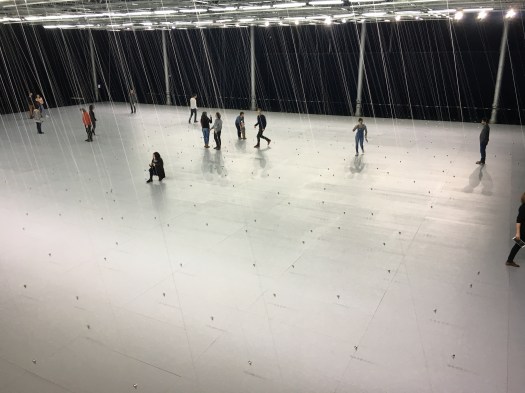
From the William Forsythe installation at La Villette


Thursday was not terribly exciting (basically, another library day…of course), so here’s a quick rundown of the weekend:


Friday:

  • Managed to finish all my Christmas shopping in one go. I know, I’m surprised as well.
  • Went to a farewell dinner for a dear friend who is off to new adventures in Singapore. One of the troubles with being an expat among other expats is the fact that while some stay, others head off, either temporarily (like me) or permanently (like some others in my group of CitéU friends). On the other hand, the perk of this is being able to point to almost any place in the world and say I know someone who lives there. For her send off, we surprised her by meeting at Bouillon Chartier – a restaurant I had never been to, but that is pretty popular because of how inexpensive it is. Back in the day, large restaurants like this were the haunts of the Parisian working class, and this is reflected still in the food served there: straightforward, no-frills, what many would consider French ‘classics’. The quality can be slightly hit or miss, depending on what you get, but really with a group of good friends and one or two bottles of red wine, do you really need much else?


A8B2F145-CA90-4AF4-B609-E0295B37096B
A small fraction of the CitéU gang 🙂


Saturday:

  • I am so bummed that the William Forsythe + Ryoji Ikeda expo (pictured at the start of this post) is closing at the end of the month because I kind of want to run around in it again. Forsythe’s contribution, as the photo above suggests, entitled Nowhere and Everywhere at the same time (see why I just had to come see this thing) involved moving through a room of lightly swinging pendulums, with the one caveat being that one could not touch them. The racks to which the pendulums were attached would also shift in regular intervals, changing both the direction of the pundulums as well as, at times, the speed of the swinging. Walking amongst them, I almost lost all awareness of what others around me were doing, instead zeroing in on the swinging objects, trying to decipher or predict their movements, finding those moments where I could sweep through the gaps they created. From above, however, it was fun observing how others moved through the room, whether there were any general patterns of movement that were followed – conclusion: people really like diagonals – or any parts of the room that were, for one reason or another, avoided (the corners, oddly enough). I don’t have any photos of Ikeda’s installation – test pattern [nº13], a sound/light experience -, but the video published on La Villette’s website gives a pretty good idea of what the experience was like (also, for those who have seen the new Twin Peaks, very strong sound design for the Black Lodge in parts 2 + 3 vibes with this one).


  • After the expo, a walk through Pantin – a suburb just to the north of La Villette – to check out some street art before heading to the MC93 in Bobigny for what I can only describe as an anti-dance dance show. Jérôme Bel’s The Show Must Go On stirred up quite a bit of controversy apparently when it first premiered back in the early 2000s (and, granted, a show that in large part consists of either empty stages or not dancing does go against pretty much all expectations when it comes to what a dance show “should” be), but time has proven very friendly to it, as given the audience reaction (including mine), it was one of those light bits of fresh air that are very much needed these days. I mean, the first piece of fully choreographed dancing was the Macarena. A further plus: the many different kinds of bodies represented, which in itself further highlighted the marked absence of differently-abled bodies on stage.


  • Finally, the evening ended with a get-together at another friend’s house with other PhDs from various American Universities, where of course one of the first topics discussed was the frustration that comes with trying to exercise our basic right, as graduate employees, of forming a union in the face of at times hostile uni administrations.


Sunday:

  • I bought some books. I find this to be a very productive use of a Sunday.


Only a few days left before I head back to California for the holidays, and I still haven’t packed a thing. Procrastination is fun.


Processed with VSCO with c2 preset

96 – 97


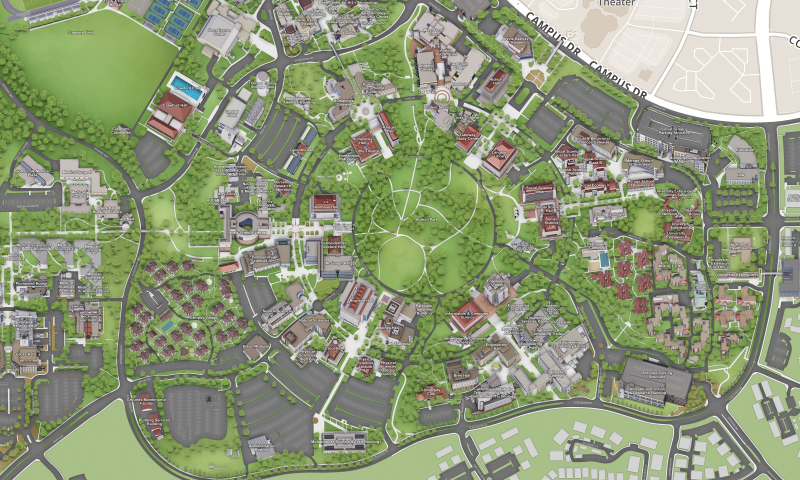
This is a map of UC Irvine.


For those unfamiliar with the campus, let me briefly break this down for you. Built in the mid-1960s (right around the time when student demonstrations on other UC campuses – notably Berkeley – were at their peak) UC Irvine is located in what was once a lot of open land. As such, the good people of the Irvine company had the freedom to construct not just the university but also its immediate surroundings in a way that, to a certain extent, responded to a growing need for a restoration of order on otherwise fraught college campuses.


Organized in a ring, the different departments and schools of UCI are notable for their detachment from each other. Indeed, rather than evoking an image of unity, the ‘rings’ of Irvine’s campus give more the impression of a panopticon than anything else. Although there is no looming tower in the center of this circle – as one would find in Foucault’s description of the panopticon in Discipline and Punish – the park at the center of campus presents its own set of conundrums. Although it is quite sizeable and provides plenty of space for picnicking and other outdoor activities, it is also very hilly. The walking paths shown in the picture kind of suggest this, but what this essentially leads to is a park with no ‘center’, that is, no point of convergence. I remember when I took my first tour of the campus before becoming a student back in 2008, our guide evoked the image of the campus layout resembling a bike wheel (a reference more to the fact that the school really, really wanted people to bike more, rather than to its having an actual cycling culture). Thing is, though, even the spokes on a bike wheel – what keeps its structural integrity intact – have a central point where they all cross.


The problem of the lack of centrality on this campus became very clear during the recession and the resulting exhorbitant rise in tuition fees. As with the other UCs, there was a mobilization effort on campus, but unfortunately, our efforts never took off to the extent of those in Berkeley or, memorably, UC Davis. This could be attributed to several factors, but here are a few I stand by:

1. The isolation of the different departments in distinct buildings, although common on many American campuses, created here a sense of ‘each department as its own island’, further emphasized by the fact that, given the circular structure of the campus, there was always a sentiment of someone watching.

2. Returning back to the park, the lack of centrality meant that there really was no natural ‘meeting point’ for students (and some faculty) to gather during demonstrations. Demonstrating on the steps of the admin building worked fine for a bit, but its location as a sort of offshoot of the greater ‘Ring Road’ made it a somewhat inconvenient place to get to for students in classes on the other side of campus.

3. What the Irvine company decided to build in the immediate surrounding area. Although we had a small shopping center just across one of the bridges leading to campus, the immediate area around UC Irvine was taken up by residential developments. Condos. Apartment complexes. Not occupied solely by students, but by private families as well. There were no student bars (the exception being the on-campus pub, but even they had to defer somewhat to campus rules regarding opening/closing times), coffee houses were pretty much various locations of impersonal Starbucks and Peet’s coffee, and in order to get anywhere of interest, one had to drive. In short, this was the anti-college-campus campus.


I bring this up because I could not help but think back to this last night after the show I saw (the title is actually a quote from architect Emile Aillaud and is rather long, so I’ll just let the photo speak for itself):

9CF61198-9DD8-4336-A831-361D1E086D0A.jpeg


Much like the last show I saw at Le 104, this show centered around a group of three ‘researchers’, this time interested in the architecture of the grands-ensembles – also known as the ‘cities’ of the Paris suburbs (banlieu) built starting in the early/mid-1960s as a response to a need for more housing (because, surprise, when your government starts calling for people to make more and more babies, eventually, these babies and their families will need homes). Originally populated by working class families, including a large number from Southern Europe (Italians especially made up large portions of the construction crews) and designed to be close to whatever factory the men of these families worked in, the reputation of the grands-ensembles did not take long to deteriorate. Instead of being heralds of the future, the cities were cold, impersonal, lacking life, isolated from the hustle and bustle of the city. As the years passed, the conversation around the banlieues shifted to them being sites of urban tension, of violence, of upheaval (and yes, there is a racial element associated with this, in case you were wondering).


Anyway, back to the show. The first thing that was remarkable about this performance was that, for once, it was not frontal. Instead, it was a theatre in the round (well, 3/4 around) with the playing space in the center containing a set of white cubes (seen in the picture above). During the opening of the show, the cubes were organized in a way that four of them made a center ‘block’ and the rest were posted in sort of ‘tower’ formations in the four corners of the space. In other words, the space was centered, organized, we could easily create a relationship with it.


Then the actors start recreating, rebuilding, reconstructing, deconstructing, the various evolutions of one of Aillaud’s designs for the grands-ensembles. Suddenly, the center exploded. No longer stable, the blocks were set in serpentine positions, creating a sort of labyrinth on the stage that, to those of us in the audience, changed the way we related to the space in front of us. No longer part of a shared ‘laboratory’/research space as in the beginning, we were now almost god-like, looking down on this aesthetic achievement below us. Meanwhile, the actors themselves weaved around not only the blocks in the center of the room, but the spaces, the gaps between the banks of seats, the sound design at times making it difficult to pinpoint exactly where one of them was at any moment. And as they, with their literal and figurative acts of destruction and construction, traversed through time to try to puzzle over how or what to make of these constructions today, the absence of the voices, the bodies, of those living in the grands-ensembles became more and more evident. For once, I think the deliberate exclusion of certain bodies (not just voices, but physical, present bodies) worked very effectively here. Indeed, at the end of the play, we see the actors in the process of creating their own ‘micro city’, designating certain blocks as community centers, pharmacies, cultural centers, parks, etc., when one of them, in the closing lines, asks:


“And what about the residents?”


That, I think got to the crux of the matter. These cities were designed with aesthetics, rather than livability in mind. Is this not what happens, though, when urban spaces are designed entirely artificially instead of allowed to grow somewhat organically, when space overly tries to dictate what its inhabitants do and how? This search for an architectural utopia lead to the sacrifice of the human, the mortal, lived element. Despite what is implied in their name, these grands-ensembles were not designed for community, neighborly living (then again, when one thinks about when they were built and who they were originally built for – to say nothing of who is “relegated” to live there now – it is not hard to see why a more divided, sequestered population would be ideal).


This, really, is what brought me back to my days at Irvine, and I’m pretty sure I talked the ear off the friend I went to see the show with about that! Otherwise, I don’t know if I can say enough how positively refreshing it was to see a troupe propose a different interpretation of the playing space, not just in terms of simply not being frontal, but something that finds the gaps in the structure, that makes the space almost alien, strange, uncanny.


Tonight I saw another show, Tue, hais quelqu’un. It was fine. There was a point where they overlaid images of the actors over their bodies, which created a really cool painterly effect, further amplified when the actors began ‘manipulating’ their images through gesture.


Clearly, however, my mind is occupied by other things.


A weekend in Montpellier (91 – 95)

F8ADD0C0-A4D5-4C18-AC28-4C14B22FC899
Welcome to Montpellier


I know what you’re thinking.


‘What in the world is the Victory of Samothrace’ doing outside of the Louvre?’


Well, this is just one of the many rather endearing quirks about Montpellier, a city I don’t  think I would have visited had I not known someone who lives there…which I do.


But before I get to that, a bit about the theatre piece I saw on Thursday night:


Processed with VSCO with a4 preset


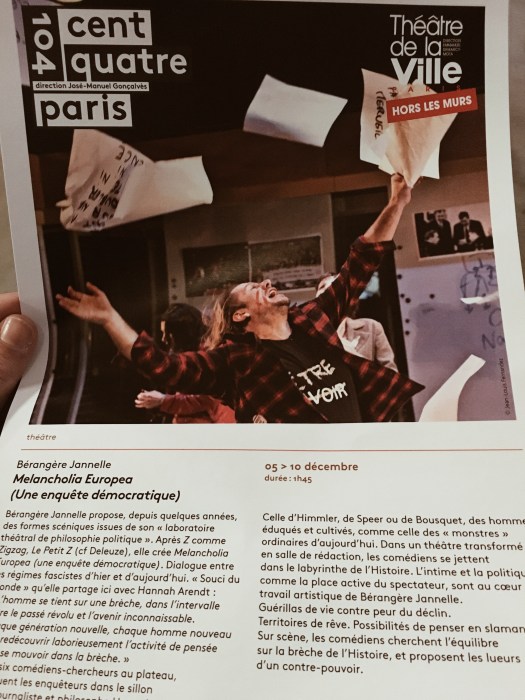
I was intrigued by Melancholia Europa (Une enquête dramatique) primarily because of the title: really, talking about a melancholy Europe seems particularly timely to me…wonder why. The chance to finally have an excuse to go to the Cent Quatre – the former home of the city undertakers up until the end of WWII, then a garage until its refurbishing/reopening as an arts center in 2008 – only further added to its appeal.


And let me just say before I get into the rest of my thoughts on the show – which, spoiler, I was mixed on -, I really, really loved that space. I’m going to be heading back there again this week, so I will try and actually remember to take some photos of it. Suffice it to say that, as far as former warehouse/factory-turned-arts spaces go, this one seems to have a keen feel for its new identity. Not only are there several theatre spaces on the premises (there was at least one other show going on the same time as ours, I believe), the space also houses a café/resto/bar (though this is pretty standard), rehearsal spaces, galleries, and, of course, the ubiquitous organic food market. This last point merits its own discussion on the passage of the organic movement from fringe to part of the capitalist machine, but that’s for another time.


Anyway, the play.


The basic premise was that we were invited in to the offices of a group of journalists/researchers grappling with the question of fascism – its roots, how it manifests/spreads, how it has evolved…or not – through the lense of Hannah Arendt’s work on the banality of evil. Although the show referenced the emergence of neofascist movements both in France/Europe and elsewhere (especially the United States), the figures examined in detail were high-ranking Nazi officials, in particular Heinrich Himmler.


There is a word that describes what it is to catch yourself almost at the point of recognizing something that could resemble humanity in someone so absolutely evil. That word is “unsettling”.


Far from rehabilitating those like Himmler, however, the play presented little tidbits about their daily private lives in order to highlight the ordinariness – the banality, if you will – of these otherwise almost unthinkably evil people, the fact that what they did could happen again, easily, anywhere.


And although moments like this were thought-provoking and effective, I’m still a bit puzzled in terms of what, exactly, the show intends for its audience to do with them.


This might be because, given how incredibly Brechtian it was (and a bit of disclosure: I’m not exactly the biggest fan of Brechtian-style theatre…I think it lets its audiences off the hook far too easily), the play’s political bent, its call to motivate audience action was very apparent. At the same time, and I am going to sound like a broken record on this, I’m not sure that maintaining the frontal stage/audience relationship really worked for this. There were moments when I felt that I was more in a lecture hall than part of something that – from what I can gather – was meant to rouse up a desire to act. Maybe this is a personal bias, but as far as theatre – any theatre really, but political theatre especially – goes, I don’t want to feel safe or secure as an audience member. Maintaining a sense of spatial order, I think, allows for a certain distanciation on the part of the audience, which, although keeping very much with Brecht’s desired alienation effect, also allows for a certain sense of ‘Not I’isms to creep out. As in the ‘Yes I can observe the suffering of the working class, but I, a middle/upper class capitalist who has the means to buy a ticket for this show am not one of the contributors to the problem, seeing as I am here learning and observing. Then I will promptly return home to think about things. Whether anything comes out of this thinking remains to be seen’ kind of distanciation.


I’ll say this again probably, but, if working on Genet for so long has influenced me in any way it is in the fact that theatre should not make you feel secure in your position whether in the building/room itself or outside it. It is a balancing act, a threat of chaos. No one should be left unscathed from it.


But now on to more upbeat matters.


Montpellier:

4B0C2EDD-E468-481F-882B-A5192B753CAF

1938C7A2-1738-4769-B17D-C8ADF1BE77C6

Processed with VSCO with s3 preset

F26241DF-CF1E-457E-8CBE-575F5EC817C1

15BDAFE2-6405-444A-BA43-DE30C6ABA6B6

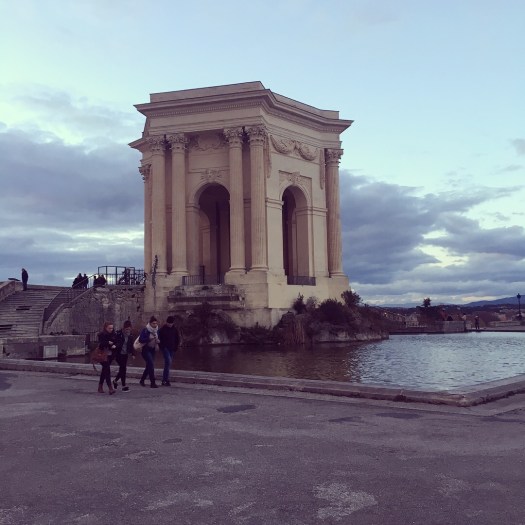
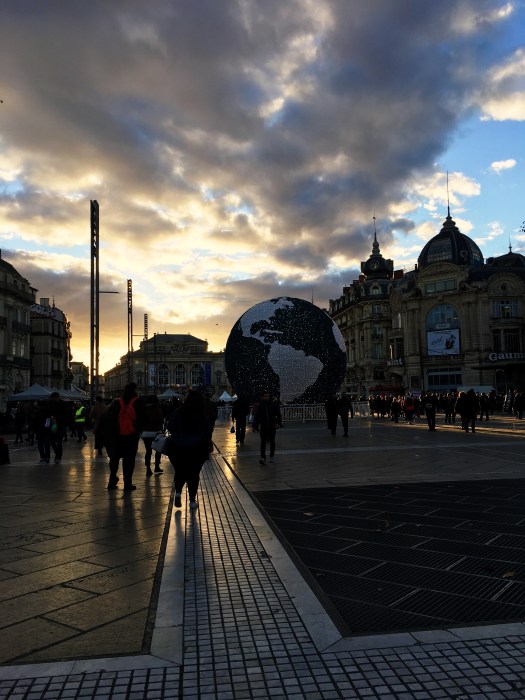
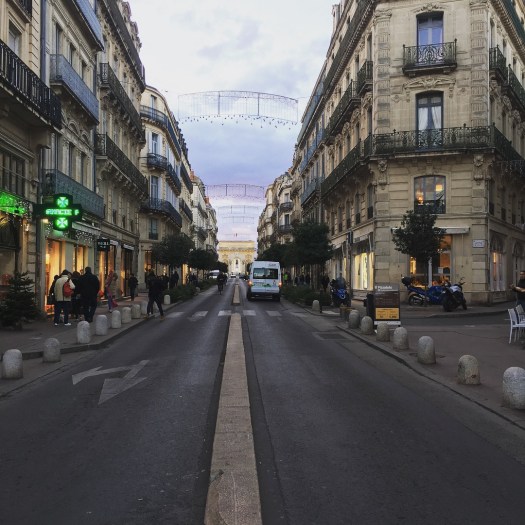
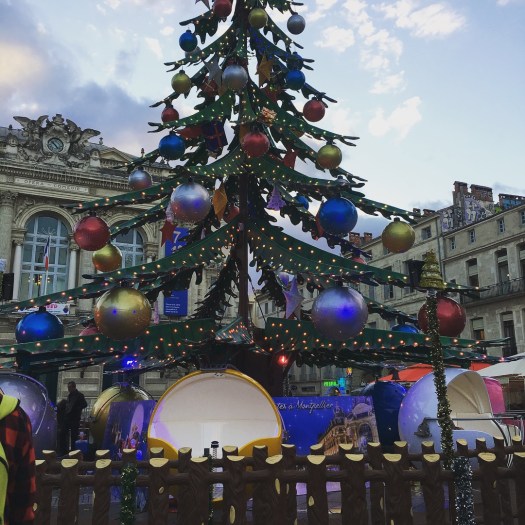
Unfortunately, given the very cold, very wet weather this weekend, there wasn’t much done in terms of outdoor exploring. Luckily, Montpellier is a small city, so I was able to see most of it – at least the older parts. The fact that there were Christmas decorations up made the whole city look like the coziest place ever, especially when those decorations involved strings of lights twinkling above narrow cobblestone streets.


Oh, and of course, the Christmas season also meant a visit to the local marché de Noël, where I finally got to try aligot – otherwise known as incredibly cheesy, buttery mashed potatoes – for the first time! I swear if it wasn’t so unbelievably unhealthy for you, I’d eat that almost every day to keep warm.


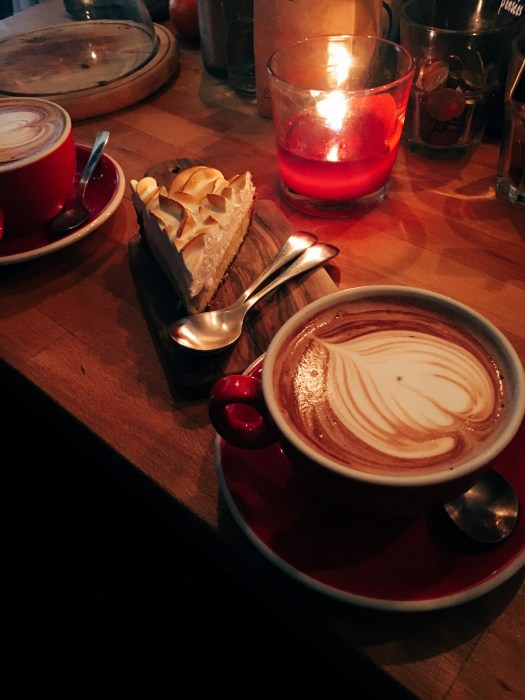
Come to think of it, I think I pretty much ate my weight in chocolate and butter this weekend, what with that Christmas market visit, plus breakfasts of crepes and Nutella, and stops for chocolat chaud and cake (the final café visit before my afternoon train back to Paris today):


Processed with VSCO with e1 preset
Coffee Club, Montpellier


Thankfully, the butter/chocolate overload was tempered by a dinner of roasted fish (dorade, for those wondering), roasted potatoes and chard on Sunday evening.


Processed with VSCO with e2 preset
Behold, my plating skills


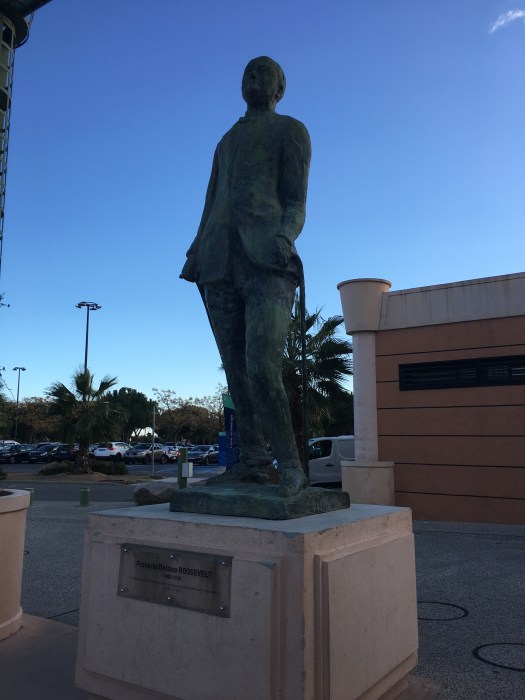
I’ll close out this post by mentioning what was, perhaps, one of my favorite quirks about Montpellier: the Place des Grandes Hommes. This is a sort of rotunda – adjacent to a mall – around which are displayed statues of great men (and one woman) who influenced history. Charles de Gaulle is there, of course, along with some others, like Lenin:


7D114BFC-C48A-408F-975E-7777648EB44A


A truly unrecognizable FDR:


2E47389C-CD11-411E-BE01-9E6F5D5C5126
Not entirely sure about the proportion of the hips here…


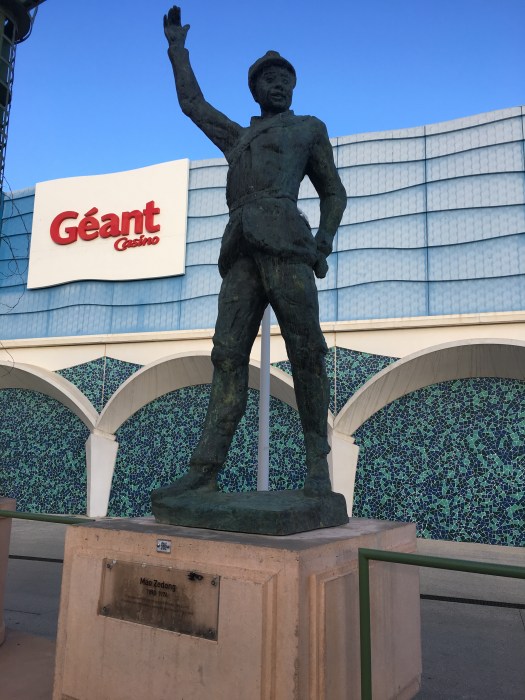
And of course, Mao Zedong, who, irony of ironies, is standing directly in front of a giant supermarket megastore (Casino is a supermarket chain, not, you know, an actual casino):


F49E29B6-0881-46B0-8FC8-04D9F4DB969B


Silliness aside, though, Montpellier was really rather adorable, and it was nice to get away from the city for a bit, the cold weather notwithstanding. Now I’ve just got to think about working off all that butter and chocolate before I head back to California for the holidays…

980AEA93-3EBE-4F1F-B4AF-9677ADEEF3B9


88 – 90

Processed with VSCO with b1 preset
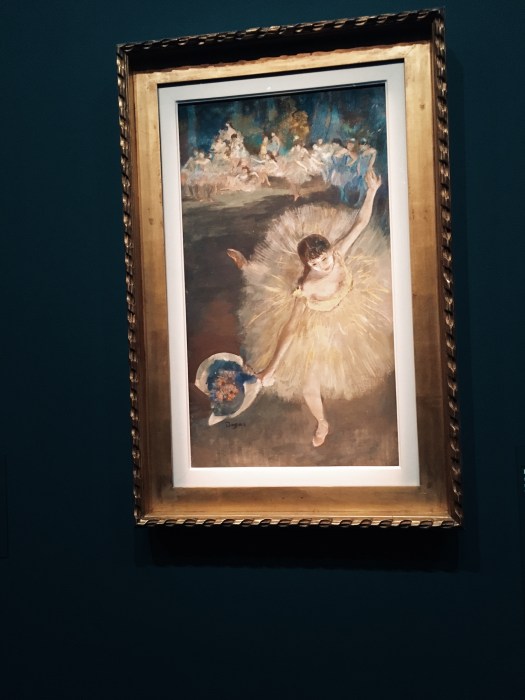
Degas – a series of dancers


Networking.


I’m not the biggest fan of it, yet it is one of those necessities of my field. I think it partially comes from the fact that, seeing as I was kind of an…eccentric, weird kid growing up, my social skills edged very close to the “oh yeah, no, this person definitely has no interest in speaking to me about my interests” territory. Thankfully that’s abated somewhat – who knew that all it took was surrounding myself with other people who liked the same things I did – but that little tinge of anxiety always comes up in one particular situation: sending emails.


And yet, here I am sending out emails to people I hope to speak to about my project, patiently waiting for a response all while wondering whether ot not the lack of one means I came off like some kind of idiot in my message. There’s a term for this…oh yes: imposter syndrome.


Yes, once again that…thing…rears its ugly head.


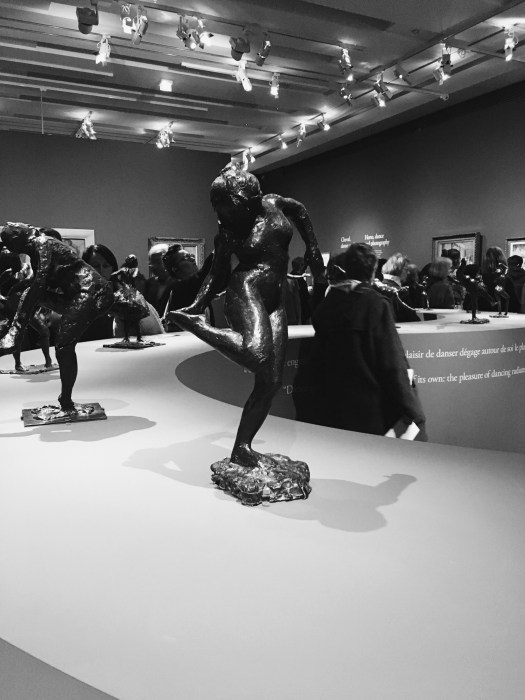
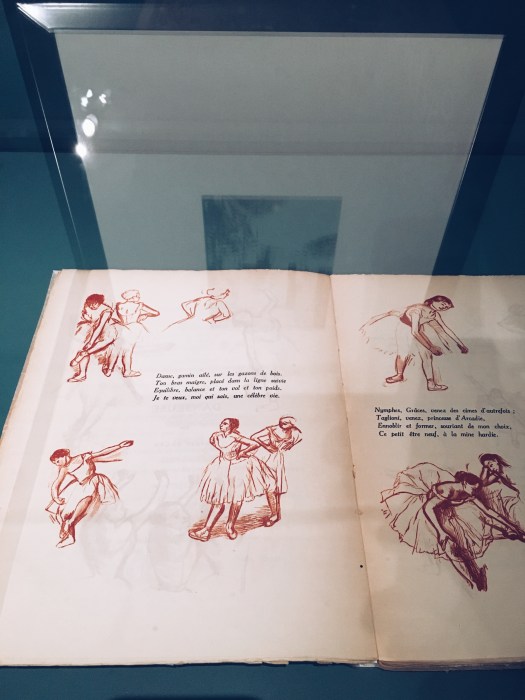
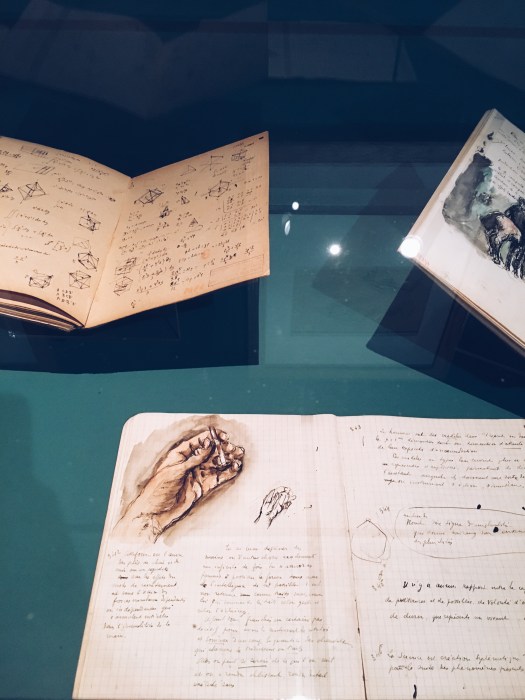
Thankfully, though, there are ways to distract from it, at least momentarily. One of these ways is stopping into the Musée d’Orsay for a bit to check out the exhibit Degas Danse Dessein. Hommage à Degas avec Paul Valéry, which examines some of Degas’ works through the lense of writer/poet Paul Valéry – who coincidentally also published a book on Degas after the latter’s death in 1917.

Processed with VSCO with a5 preset
Degas as poet
Processed with VSCO with a5 preset
Valéry as illustrator


The exhibit was centered primarily around the close friendship between Degas and Valéry, one that has apparently almost been forgotten. Interspersed amongst the Degas works on display – the majority of them being works in process, or the stages of a process rather than ‘completion’ – , were fragments from Valéry’s 1937 text on the artist (and whose title the exhibit borrows for its own). Fragments conversing with other fragments, medium complementing medium, each one revealing more of itself through its attachment to or bonding with the other…there’s a certain intimacy that arises from the realization of exactly how much one person permeated into the works of another.


Processed with VSCO with s3 preset
Honestly, I don’t know if I will ever get over how much I love the…rawness of Degas’s bodies…
Processed with VSCO with u3 preset
The ubiquitous ballerina painting…


Tomorrow will be a day of preliminary Christmas shopping/scouting, closing with – finally – another night of theatre. Oh, and packing. I’m off on a quick adventure this weekend. More to follow…

85 – 87

Processed with VSCO with s2 preset


As you can probably gather from the photo above, things have gotten considerably greyer in Paris these last few days.


Not that I mind, however. I actually find that this compliments my own personal brand of surliness and general ill-humor (especially concerning the continued spew of nonsense happening back in the States, which, yes, sometimes does keep me up at night…still) very well.


It does also mean that my habitual outdoor wanderings may end up slowing down considerably (though not stopping entirely), since catching a cold is not exactly on my list of priorities right now.


Anyway, here are some highlights from a weekend otherwise spent in the comfort of my heated apartment:


  • Seeing Coco (yes, it is possible to find non-dubbed versions of English animated films, although it does usually mean having to go to a later showing), and being very pleasantly surprised to find that the annoying 20-minute Frozen short everyone has been complaining about was not programmed to play before the film. Actually, come to think of it, they only actually showed one trailer – for that movie about the bull…I think it’s called Ferdinand. In sum: if you haven’t seen Coco yet, go. The animation is absolutely stunning (then again, it is Pixar), and the story is incredibly touching. Oh, and as an added bonus: I hear they’re getting rid of that short entirely.


  • Celebrating a friend’s birthday at Le Capsule on Saturday, and validating my opinion on why bars with caves are an absolutely excellent thing (especially when it comes to parties).

83 – 84

Processed with VSCO with s2 preset
Another photo from my walk a couple days ago.


So tonight, I was technically supposed to head back out to Nanterre to see the supplement to that show I saw a few days ago, but seeing as how the temperature has dropped a bit more today (and given how tired I was feeling even though all I did today was look at more unique theatre designs), I decided to skip it.


There goes five euros.


On the other hand, had I gone, I would have missed the bit of snow we just got this evening, and then how could I possibly channeled my creativity into making this gem?


Processed with VSCO with s3 preset
In lieu of twigs, his appendages are made from grape stems