121 – 126

7AF48237-7C4C-47B9-810F-F897FD93EEDF
Nanterre


Yes, yes, I know. Another week with nary a daily update. Once again, the week got the better of me.


But, I’m not really complaining either because if anything, this week was absolutely packed with theatre.


Let’s start with Tuesday night.


Processed with VSCO with c3 preset

Unlike pretty much everything else I choose to see, this play was a pretty straightforward drama, but I will say that as far as 3+ hour plays go, I can’t remember the last time one went by so effortlessly.


And really, you have to give a show credit for being able to draw you in for that long, but given that the subject matter was a story that travelled back and forth between the last days of the French colonial occupation of Vietnam to the country’s eventual reopening in 1996, it’s almost amazing that the show was only three hours long.


Also, one side of the stage was set up as a real, functioning kitchen run by one of the characters. And by functioning, I mean that they were actually making and serving food to some of the other characters/restaurant patrons. There are only so many steaming bowls of pho you can see being consumed before you really start to lament the sad little sandwich you grabbed at the last minute because you knew otherwise you would not be eating until incredibly late that evening.


Yeah, I got home pretty late that night (thankfully there was chocolate cake at home!) and I had to be up at the crack of dawn the next day. 8am teaching everyone. It’s real.


Right, on to the next thing:
 

Processed with VSCO with u4 preset


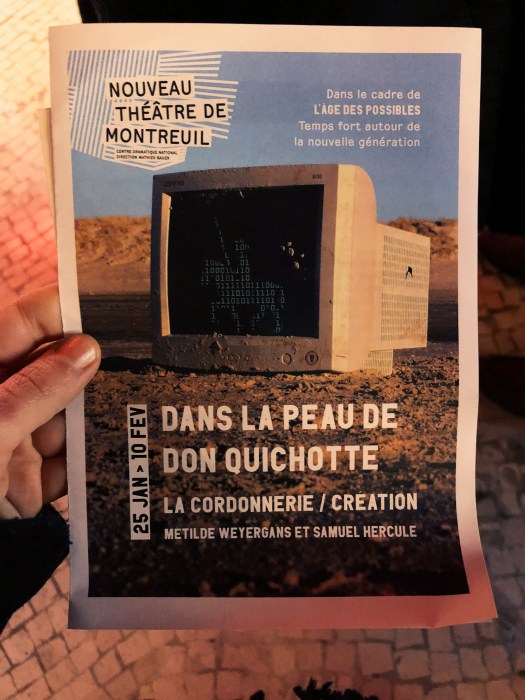
Imagine mixing theatre, cinema and radio together into one cohesive show, and you’ll get this. The premise: while poking around at a rummage sale, the troupe – La Cordonnerie – stumbled across a script for a never-produced re-imagining of Don Quixote  centered around a library worker – furiously trying to digitize the catalogue before the Y2K bug ‘hits and deletes everything’ – imagining himself as Cervantez’s titular hero. What results is a projection of the film the troupe made from this script, yet what becomes very clear from the start is that, although the film was clearly produced with modern cameras, it is otherwise silent.


Yeah that’s right everyone, the actors on stage were also acting as foley and voice-over artists, the stage slowly filling with gadgets and knick-knacks that by the end made the whole space look rather like a garage right before a yard sale.


What’s more, at a certain point, after it becomes clear that the actors on stage not only appear in the film, but also provide their own voice-overs (using a rather clever trick of holding a mirror up to see the screen behind them as they remained facing forward), the otherwise very frontal space begins to take on a sort of stratified depth. Maybe it had something to do not only with the simultaneous – yet also temporal-crossing – appearance of certain actors’ bodies on stage and screen, or even with the displacement of voice that although it resonates from the body present on stage is difficult to disassociate from the image of the actor on screen, but I wonder if one could consider this a way of using frontality that otherwise avoids a regression towards a flattening mimetic representation.


And speaking of mimesis…


Processed with VSCO with s2 preset


I’m not entirely sure how well I can describe the trip into uncanny valley I took last night with Susanne Kennedy’s adaptation of Fassbinder’s Warum Läuft Herr R. Amok? at Nanterre, but here’s an attempt anyway.


First thing’s first: the play, as mentioned, is based on a Fassbinder film, but to be more precise, it is a literal word-for-word staging of a film that, as emphasized by Kennedy, was largely improvised. Imagine, then, the process of taking improvised text – text that is by nature not only impulsive and fluid but also firmly anchored in a present sociotemporal situation – rehearsing it and codifying it to a point where it loses almost all semblance of humanity to become merely an approximation of it. This reduction of ‘natural’ or ‘ordinary’ behavior to its bare-bones, its ‘skeleton’, its ‘codes’ extended into the movement and gestures of the actors, who seemed more like avatars on the SIMs, aliens behaving in ways they assume a human behaves than – I don’t want to say ‘real’ bodies, at the risk of seeming to promote a realistic aesthetic that I am quite frankly…not a fan of for the most part – an actual….body…if that makes sense. This SIMification extended into the costume and makeup design. The banality of the costumes made it so that several characters were switching characters back and forth, with everyone playing either the lead male or the lead female at least once. As to the makeup, the photo above doesn’t really do it justice, but this is where the uncanny element was incredibly evident. Instead of traditional makeup, the actors wore latext masks that were designed to mold to their natural faces, while, once again, only producing a surface-level approximation of all their individual characteristics, bone structures, wrinkles, dimples, etc. The end result of all this, other than the previously mentioned inescapable presence of the uncanny, was an almost agressive mimesis, made even more so by the fact that on the rare instances in which unmasked actors did appear, it was – with the exception of a moment at the end – via video projection, corporeality and materiality rendered flat.


There was a point to the whole rendering strange of otherwise banal, quotidien speech and gesture (the play closes with the titular Herr R (Mr. R) killing his wife, son and an unfortunate neighbor), but one thing that’s still itching at me is the question as to why there was a need to tell this story about a man who, driven mad by the aggressive mundaneness of the everyday, ends up releasing his frustration in an act of violence, at this present time. Not to take away from the staging itself – there is something to be said about the use of frontality, the literal screenifying of a stage with a wooden frame, in the creation of a simulation of human interaction – but as I was walking in Ménilmontant afterwords on the way to meet people, I couldn’t help but linger on this question.


Anyway, I’m going to be returning back to this thing during my seminar on Tuesday, so we’ll see if my thinking changes at all.


Some final highlights:

  • Friday was another house party at a friend’s place where I once again confirmed the difficulty I have with staying away from really good cheese.
  • Technically today, I was supposed to have a tutoring session with a student. Unfortunately, this student did not choose to tell me about a tournament they were attending this weekend until after I not only crossed to the other side of the city, but also waited outside their building trying to contact them for twenty minutes. There’s a reason that, back when I still took private voice lessons, my teachers insisted on charging for any non-emergency cancellations less than 24hours before an appointment. Ah well. Not to be discouraged, I took advantage of the fact that not only was it not raining, but it had also been a while since I had a nice long walk to trek all the way from Porte Maillot to Ten Belles for a gooey, cozy croque monsieur and a noisette. Oh and also a pasteis de nata from the Portuguese bakery next door. Silver lining, everyone.


113 – 118

Hectic week (and a bit of a stray cough from losing my voice from talking so much) means I’m a bit behind. Anyway, here’s a rundown of the past week, in no particular order with regards to dates.


452A0F26-1EFE-4D8B-B4BC-C5DA85943628
Thought this was amusing


First off: I just want to bring everyone’s attention to the fact that Raviolis Chinois Nord-Est offers 10 dumplings for just 5euros. Aside from adding this to the ever-growing list of reasons as to why I love the neighborhood I live near (and will hopefully continue to live in next year), this is probably a good time to once again reiterate some difficulties I have whenever I get asked for restaurant recommendations by people visiting. It doesn’t really need to be specified that the kinds of restaurants usually sought-after are French ones (you know, kind of a priority when visiting France), but the thing is, when I go out to eat, I don’t usually go for French food. One: I can pretty much acquire all the cheese, charcuterie, breads and pastries I desire from my local market (and also, when it comes to classics like soups and stews, I can make those at home). Two: it’s not exactly the most affordable of dining options, with one or two exceptions. You know what is both affordable and delicious? 10 dumplings for 5 euros, that’s what (I highly recommend the pork, cabbage and mushroom ones).


To continue on the dumpling theme, this evening included a midnight snack of sorts with a friend of mine at Le Pacifique, another establishment not terribly far from my place, and which has the added bonus of offering continued service from 11h00 to 01h30…yeah as in AM. Prior to stopping there, we paid a visit to a couple bars in the area (namely Combat and Le Renard) for Paris cocktail week.


Processed with VSCO with s3 preset
Cocktail special at Le Renard


Anyway, back to Le Pacifique. I’m not sure how, but during the course of the evening, the conversation turned to dim sum (more specifically, whether or not any places that served dim sum cart-style existed in this city), which later developed into a craving for some late-night dumpling snacking. As it was around 23h30, Le Pacifique was really our only option, but as it had caught our eyes on the way to Le Renard from Combat anyway, the lack of other options wasn’t really that disappointing. We ordered two kinds of dumplings : pork sui mai, and one only labeled as ‘fried with five-spice’, along with a small Tsing Tao to share.


I’m not entirely sure if it was because of the late night, or the two cocktails from earlier in the evening, but those fried dumplings – or, to be more accurate, little football-shaped puffy, gluant, pillows of joy – were just about some of the most heavenly things I put in my mouth that evening. The fact that they were fried and filled with what we assumed to be pork – the menu didn’t specify – probably had something to do with it, but believe me when I say we sat rhapsodizing about them for a good half an hour after we were finished. For the sake of preserving the memory, I’m going to wait a bit before heading back there, but given their pretty decent dim sum offerings (cart or not), I have a feeling I’ll be back soon to make my way through the menu anyway.


Right, moving on.


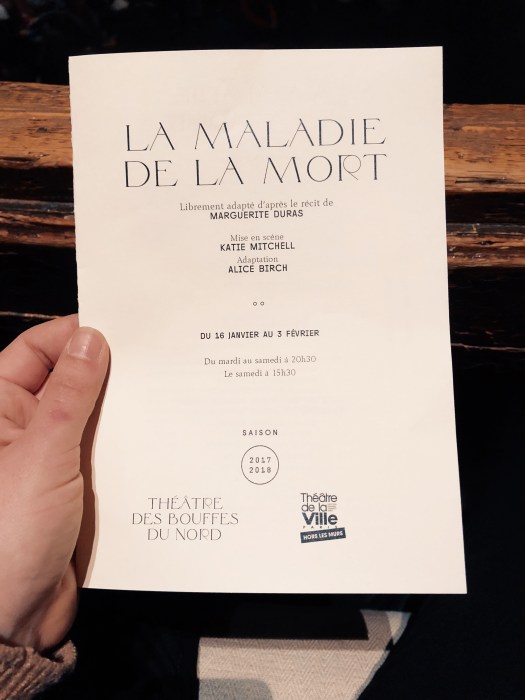
This week I also happened to see two shows involving video projections. First, La Maladie de la Mort (an adaptation of the Marguerite Duras text of the same name) at the Théâtre des Bouffes du Nord (for all you theatre geeks, yes this is the theatre Peter Brooke used to work in).

Processed with VSCO with u3 preset
Instagram @effie143


I want to preface this commentary by saying that although I’ve hinted at my let’s call it ‘suspicion’ at the almost default status of the frontal relationship in theatre/staging, I do think it is still possible to use the format in a critically successful way. Case in point: the stage here was set up not unlike a film set (complete with an ever-present camera and sound crew), meaning that there were points where a good part of the stage – or from my perspective sitting on the extreme right side of the mezzanine, most of the stage – was obstructed from the audience’s view. In light of this, a screen was set up above the stage onto which was projected both what was in the process of being filmed as well as some pre-recorded segments.


Given that the narrative – for those unfamiliar with Duras’s novella – revolves around a man paying a woman to come visit him nightly in a hotel room to teach him how to love, the use of the screen and video, in juxtaposition with the real-time staging and recording of the action, was, to me a logical way to explore the way in which we consume images/media, and that involving women’s bodies in particular. The connection to the pornography industry is, of course, evident, and put even more in the forefront by the fact that, periodically, the Man would open a laptop to watch a pornographic scene with relative indifference. Interestingly though, even though there were moments where I wished I could simultaneously watch what was happening on stage as well as on screen (especially during moments where one character was being filmed and the other was prepping for their next scene, or when a pre-recorded moment was playing while the actors themselves were readying for their next cue), thinking back, I feel that one of the results of this permanent denial of the gaze is how it enhances the flatness or lack of depth that comes with sitting in front of a screen to consume images/media. The background work, the bodies, the in-between cuts are missing all for the sake of constructing a singular narrative. Maintain the image over the body that brings it forth.


Coincidentally, the piece I saw last night was also an adaptation – this time of Strindberg’s  Ghost Sonnata – that used simultaneous recording/projection as a central part of its staging.


Processed with VSCO with a5 preset
Instagram @effie143


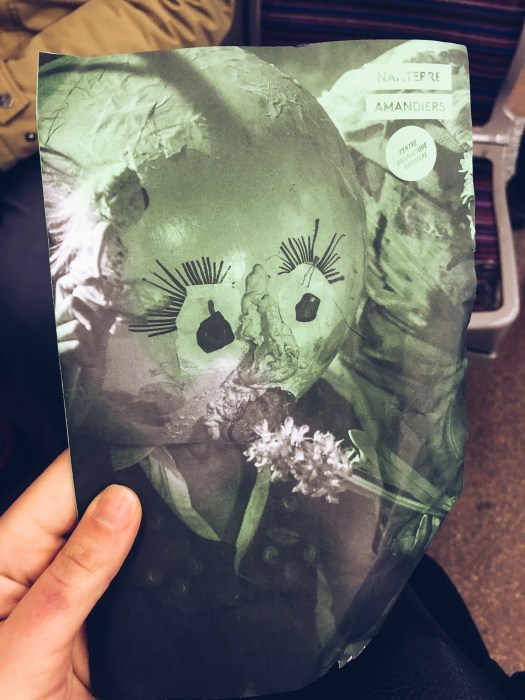
I was back at the Theatre des Amandiers in Nanterre for this one, only this time instead of the usual audience/stage set-up in the main theatre, a tri-frontal stage was set up on the stage itself. As we all filed in to take our seats around the playing space – on which were set up a couple of what looked like cardboard house-type structures as well as a crude paper mâché fountain in a baby pool – a large quadri-frontal video screen projected images of other audience members as they walked in, not unlike a video surveillance system in a shop. Coincidentally, this is also how I discovered my thesis advisor was in attendance. Amazing what this quasi-Big Brother-like gaze can do.


The play opened with director Markus Öhrn walking on stage, looking not unlike a more zombie-like Marilyn Manson, to welcome everyone, as well as to set the general vibe for the evening by inviting audience members to switch seats as they wished or, should nature call within the next 90 minutes, get up to use the restroom and then come back.


I always find it interesting how, especially in theatre settings, whenever audiences are told they have the option of movement, they rarely, if ever, take advantage of it.


In this case though, this may have had to do with the fact that we were more reliant on the projected images than I think I would have liked to take advantage of the fact that there were a few empty seats around that we could move to. Granted, I don’t think keeping much of what was happening enclosed in the cardboard structures helped matters, nor did the lack of places to sit anywhere except in one of the four banks of seats around the stage. If the goal is to break with spatial codes or the architectural imposition of theatrical spaces, a spatial design that not only, to an extent, reinforces a certain set of frontiers and boundaries between space reserved for playing and that for observing, but also functions on a system of surveillance both with the early video projection as well as the fact that it was very easy to train one’s gaze on the other audience members sitting on the other side of the room, does not necessarily invite divergence. If anything, this show that at first seems to want to move away from frontality actually ends up reverting back to it.


I also think I made the somewhat poor choice of sitting in a front row of seats, as I had to crane my neck up to watch the videos (the play was in Polish with surtitles in French and English, so reading along was almost necessary on a linguistic level as well). Towards the end of the show, however, I found that I was paying less attention to the videos, and more to the little moments that these Jack in the Box mascot-meets-a-flamethrower grotesque clown figures moved about the stage, peeking out of the cardboard box windows, playing a bit with our gaze on them. Perhaps if there were a bit more of that – actually, I think the production could have done away with the text almost entirely, aside from the little intro video played in the beginning to explain who each of the characters were – the frontal relationship could have been broken down further. Then again, one of the first major sequences involved a rather violent rager in a concert hall (which followed honestly one of the funniest sequences in which a character tries to find his seat at an opera house, all in the very frustrating but incredibly real style of a dream sequence in which you know the thing you seek is right in front of you, yet your mental state refuses to let you accept this), which was maybe a bit too reminiscent of the In Yer Face theatre of the 1990s in the sense of, “can this thing which has been done to the point of transforming into an almost codified aesthetic still be impactful”.


Anyway, enough of that. Here’s to hoping for more frequent postings next week.


479DE269-30C8-49AB-A7EF-E79477DBD4C5

98 – 101

6C4DC092-C0B8-4806-8EBA-6BBA9826F3B9
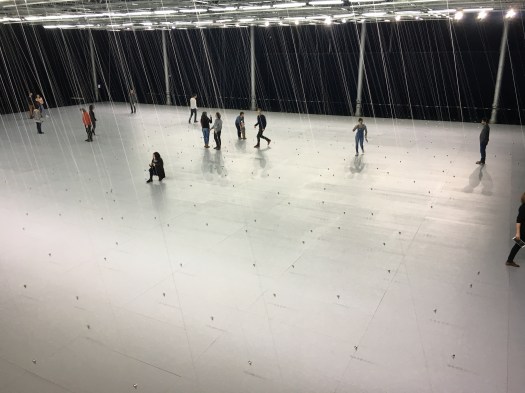
From the William Forsythe installation at La Villette


Thursday was not terribly exciting (basically, another library day…of course), so here’s a quick rundown of the weekend:


Friday:

  • Managed to finish all my Christmas shopping in one go. I know, I’m surprised as well.
  • Went to a farewell dinner for a dear friend who is off to new adventures in Singapore. One of the troubles with being an expat among other expats is the fact that while some stay, others head off, either temporarily (like me) or permanently (like some others in my group of CitéU friends). On the other hand, the perk of this is being able to point to almost any place in the world and say I know someone who lives there. For her send off, we surprised her by meeting at Bouillon Chartier – a restaurant I had never been to, but that is pretty popular because of how inexpensive it is. Back in the day, large restaurants like this were the haunts of the Parisian working class, and this is reflected still in the food served there: straightforward, no-frills, what many would consider French ‘classics’. The quality can be slightly hit or miss, depending on what you get, but really with a group of good friends and one or two bottles of red wine, do you really need much else?


A8B2F145-CA90-4AF4-B609-E0295B37096B
A small fraction of the CitéU gang 🙂


Saturday:

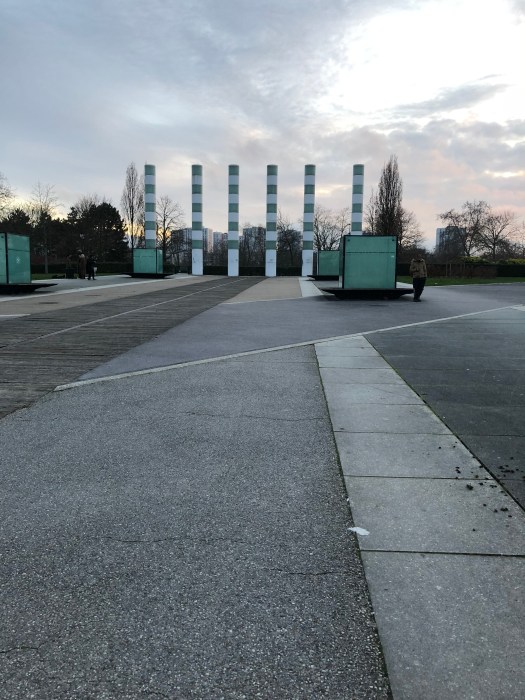
  • I am so bummed that the William Forsythe + Ryoji Ikeda expo (pictured at the start of this post) is closing at the end of the month because I kind of want to run around in it again. Forsythe’s contribution, as the photo above suggests, entitled Nowhere and Everywhere at the same time (see why I just had to come see this thing) involved moving through a room of lightly swinging pendulums, with the one caveat being that one could not touch them. The racks to which the pendulums were attached would also shift in regular intervals, changing both the direction of the pundulums as well as, at times, the speed of the swinging. Walking amongst them, I almost lost all awareness of what others around me were doing, instead zeroing in on the swinging objects, trying to decipher or predict their movements, finding those moments where I could sweep through the gaps they created. From above, however, it was fun observing how others moved through the room, whether there were any general patterns of movement that were followed – conclusion: people really like diagonals – or any parts of the room that were, for one reason or another, avoided (the corners, oddly enough). I don’t have any photos of Ikeda’s installation – test pattern [nº13], a sound/light experience -, but the video published on La Villette’s website gives a pretty good idea of what the experience was like (also, for those who have seen the new Twin Peaks, very strong sound design for the Black Lodge in parts 2 + 3 vibes with this one).


  • After the expo, a walk through Pantin – a suburb just to the north of La Villette – to check out some street art before heading to the MC93 in Bobigny for what I can only describe as an anti-dance dance show. Jérôme Bel’s The Show Must Go On stirred up quite a bit of controversy apparently when it first premiered back in the early 2000s (and, granted, a show that in large part consists of either empty stages or not dancing does go against pretty much all expectations when it comes to what a dance show “should” be), but time has proven very friendly to it, as given the audience reaction (including mine), it was one of those light bits of fresh air that are very much needed these days. I mean, the first piece of fully choreographed dancing was the Macarena. A further plus: the many different kinds of bodies represented, which in itself further highlighted the marked absence of differently-abled bodies on stage.


  • Finally, the evening ended with a get-together at another friend’s house with other PhDs from various American Universities, where of course one of the first topics discussed was the frustration that comes with trying to exercise our basic right, as graduate employees, of forming a union in the face of at times hostile uni administrations.


Sunday:

  • I bought some books. I find this to be a very productive use of a Sunday.


Only a few days left before I head back to California for the holidays, and I still haven’t packed a thing. Procrastination is fun.


Processed with VSCO with c2 preset

96 – 97


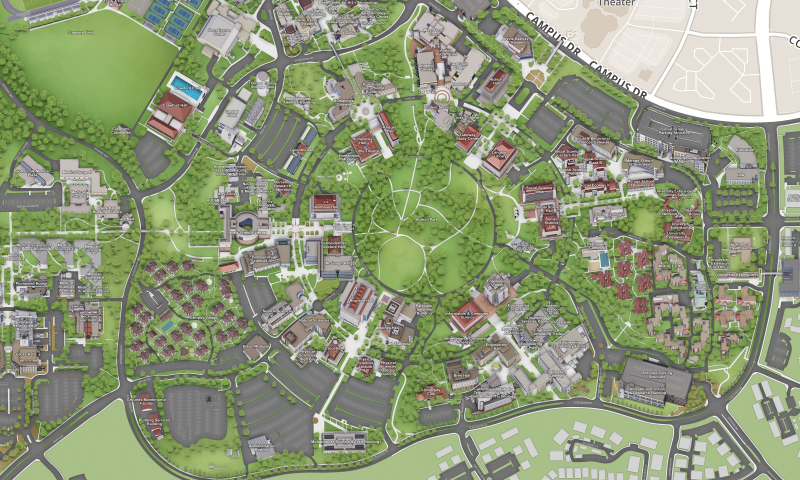
This is a map of UC Irvine.


For those unfamiliar with the campus, let me briefly break this down for you. Built in the mid-1960s (right around the time when student demonstrations on other UC campuses – notably Berkeley – were at their peak) UC Irvine is located in what was once a lot of open land. As such, the good people of the Irvine company had the freedom to construct not just the university but also its immediate surroundings in a way that, to a certain extent, responded to a growing need for a restoration of order on otherwise fraught college campuses.


Organized in a ring, the different departments and schools of UCI are notable for their detachment from each other. Indeed, rather than evoking an image of unity, the ‘rings’ of Irvine’s campus give more the impression of a panopticon than anything else. Although there is no looming tower in the center of this circle – as one would find in Foucault’s description of the panopticon in Discipline and Punish – the park at the center of campus presents its own set of conundrums. Although it is quite sizeable and provides plenty of space for picnicking and other outdoor activities, it is also very hilly. The walking paths shown in the picture kind of suggest this, but what this essentially leads to is a park with no ‘center’, that is, no point of convergence. I remember when I took my first tour of the campus before becoming a student back in 2008, our guide evoked the image of the campus layout resembling a bike wheel (a reference more to the fact that the school really, really wanted people to bike more, rather than to its having an actual cycling culture). Thing is, though, even the spokes on a bike wheel – what keeps its structural integrity intact – have a central point where they all cross.


The problem of the lack of centrality on this campus became very clear during the recession and the resulting exhorbitant rise in tuition fees. As with the other UCs, there was a mobilization effort on campus, but unfortunately, our efforts never took off to the extent of those in Berkeley or, memorably, UC Davis. This could be attributed to several factors, but here are a few I stand by:

1. The isolation of the different departments in distinct buildings, although common on many American campuses, created here a sense of ‘each department as its own island’, further emphasized by the fact that, given the circular structure of the campus, there was always a sentiment of someone watching.

2. Returning back to the park, the lack of centrality meant that there really was no natural ‘meeting point’ for students (and some faculty) to gather during demonstrations. Demonstrating on the steps of the admin building worked fine for a bit, but its location as a sort of offshoot of the greater ‘Ring Road’ made it a somewhat inconvenient place to get to for students in classes on the other side of campus.

3. What the Irvine company decided to build in the immediate surrounding area. Although we had a small shopping center just across one of the bridges leading to campus, the immediate area around UC Irvine was taken up by residential developments. Condos. Apartment complexes. Not occupied solely by students, but by private families as well. There were no student bars (the exception being the on-campus pub, but even they had to defer somewhat to campus rules regarding opening/closing times), coffee houses were pretty much various locations of impersonal Starbucks and Peet’s coffee, and in order to get anywhere of interest, one had to drive. In short, this was the anti-college-campus campus.


I bring this up because I could not help but think back to this last night after the show I saw (the title is actually a quote from architect Emile Aillaud and is rather long, so I’ll just let the photo speak for itself):

9CF61198-9DD8-4336-A831-361D1E086D0A.jpeg


Much like the last show I saw at Le 104, this show centered around a group of three ‘researchers’, this time interested in the architecture of the grands-ensembles – also known as the ‘cities’ of the Paris suburbs (banlieu) built starting in the early/mid-1960s as a response to a need for more housing (because, surprise, when your government starts calling for people to make more and more babies, eventually, these babies and their families will need homes). Originally populated by working class families, including a large number from Southern Europe (Italians especially made up large portions of the construction crews) and designed to be close to whatever factory the men of these families worked in, the reputation of the grands-ensembles did not take long to deteriorate. Instead of being heralds of the future, the cities were cold, impersonal, lacking life, isolated from the hustle and bustle of the city. As the years passed, the conversation around the banlieues shifted to them being sites of urban tension, of violence, of upheaval (and yes, there is a racial element associated with this, in case you were wondering).


Anyway, back to the show. The first thing that was remarkable about this performance was that, for once, it was not frontal. Instead, it was a theatre in the round (well, 3/4 around) with the playing space in the center containing a set of white cubes (seen in the picture above). During the opening of the show, the cubes were organized in a way that four of them made a center ‘block’ and the rest were posted in sort of ‘tower’ formations in the four corners of the space. In other words, the space was centered, organized, we could easily create a relationship with it.


Then the actors start recreating, rebuilding, reconstructing, deconstructing, the various evolutions of one of Aillaud’s designs for the grands-ensembles. Suddenly, the center exploded. No longer stable, the blocks were set in serpentine positions, creating a sort of labyrinth on the stage that, to those of us in the audience, changed the way we related to the space in front of us. No longer part of a shared ‘laboratory’/research space as in the beginning, we were now almost god-like, looking down on this aesthetic achievement below us. Meanwhile, the actors themselves weaved around not only the blocks in the center of the room, but the spaces, the gaps between the banks of seats, the sound design at times making it difficult to pinpoint exactly where one of them was at any moment. And as they, with their literal and figurative acts of destruction and construction, traversed through time to try to puzzle over how or what to make of these constructions today, the absence of the voices, the bodies, of those living in the grands-ensembles became more and more evident. For once, I think the deliberate exclusion of certain bodies (not just voices, but physical, present bodies) worked very effectively here. Indeed, at the end of the play, we see the actors in the process of creating their own ‘micro city’, designating certain blocks as community centers, pharmacies, cultural centers, parks, etc., when one of them, in the closing lines, asks:


“And what about the residents?”


That, I think got to the crux of the matter. These cities were designed with aesthetics, rather than livability in mind. Is this not what happens, though, when urban spaces are designed entirely artificially instead of allowed to grow somewhat organically, when space overly tries to dictate what its inhabitants do and how? This search for an architectural utopia lead to the sacrifice of the human, the mortal, lived element. Despite what is implied in their name, these grands-ensembles were not designed for community, neighborly living (then again, when one thinks about when they were built and who they were originally built for – to say nothing of who is “relegated” to live there now – it is not hard to see why a more divided, sequestered population would be ideal).


This, really, is what brought me back to my days at Irvine, and I’m pretty sure I talked the ear off the friend I went to see the show with about that! Otherwise, I don’t know if I can say enough how positively refreshing it was to see a troupe propose a different interpretation of the playing space, not just in terms of simply not being frontal, but something that finds the gaps in the structure, that makes the space almost alien, strange, uncanny.


Tonight I saw another show, Tue, hais quelqu’un. It was fine. There was a point where they overlaid images of the actors over their bodies, which created a really cool painterly effect, further amplified when the actors began ‘manipulating’ their images through gesture.


Clearly, however, my mind is occupied by other things.


A weekend in Montpellier (91 – 95)

F8ADD0C0-A4D5-4C18-AC28-4C14B22FC899
Welcome to Montpellier


I know what you’re thinking.


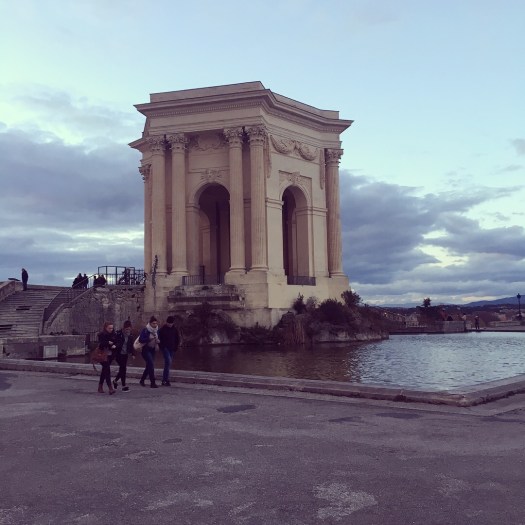
‘What in the world is the Victory of Samothrace’ doing outside of the Louvre?’


Well, this is just one of the many rather endearing quirks about Montpellier, a city I don’t  think I would have visited had I not known someone who lives there…which I do.


But before I get to that, a bit about the theatre piece I saw on Thursday night:


Processed with VSCO with a4 preset


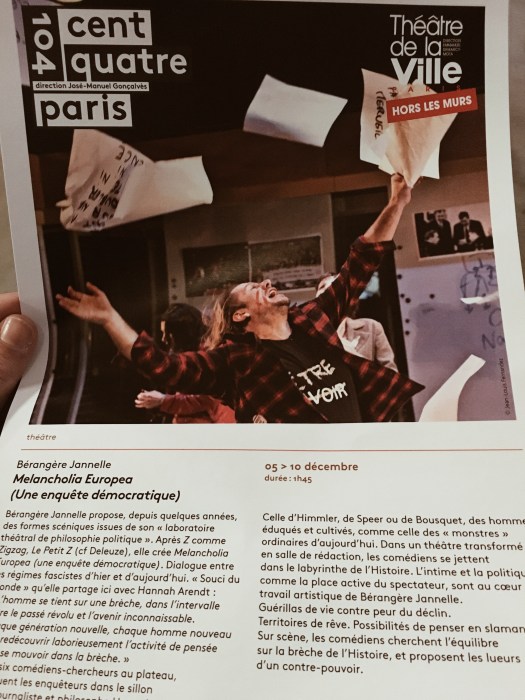
I was intrigued by Melancholia Europa (Une enquête dramatique) primarily because of the title: really, talking about a melancholy Europe seems particularly timely to me…wonder why. The chance to finally have an excuse to go to the Cent Quatre – the former home of the city undertakers up until the end of WWII, then a garage until its refurbishing/reopening as an arts center in 2008 – only further added to its appeal.


And let me just say before I get into the rest of my thoughts on the show – which, spoiler, I was mixed on -, I really, really loved that space. I’m going to be heading back there again this week, so I will try and actually remember to take some photos of it. Suffice it to say that, as far as former warehouse/factory-turned-arts spaces go, this one seems to have a keen feel for its new identity. Not only are there several theatre spaces on the premises (there was at least one other show going on the same time as ours, I believe), the space also houses a café/resto/bar (though this is pretty standard), rehearsal spaces, galleries, and, of course, the ubiquitous organic food market. This last point merits its own discussion on the passage of the organic movement from fringe to part of the capitalist machine, but that’s for another time.


Anyway, the play.


The basic premise was that we were invited in to the offices of a group of journalists/researchers grappling with the question of fascism – its roots, how it manifests/spreads, how it has evolved…or not – through the lense of Hannah Arendt’s work on the banality of evil. Although the show referenced the emergence of neofascist movements both in France/Europe and elsewhere (especially the United States), the figures examined in detail were high-ranking Nazi officials, in particular Heinrich Himmler.


There is a word that describes what it is to catch yourself almost at the point of recognizing something that could resemble humanity in someone so absolutely evil. That word is “unsettling”.


Far from rehabilitating those like Himmler, however, the play presented little tidbits about their daily private lives in order to highlight the ordinariness – the banality, if you will – of these otherwise almost unthinkably evil people, the fact that what they did could happen again, easily, anywhere.


And although moments like this were thought-provoking and effective, I’m still a bit puzzled in terms of what, exactly, the show intends for its audience to do with them.


This might be because, given how incredibly Brechtian it was (and a bit of disclosure: I’m not exactly the biggest fan of Brechtian-style theatre…I think it lets its audiences off the hook far too easily), the play’s political bent, its call to motivate audience action was very apparent. At the same time, and I am going to sound like a broken record on this, I’m not sure that maintaining the frontal stage/audience relationship really worked for this. There were moments when I felt that I was more in a lecture hall than part of something that – from what I can gather – was meant to rouse up a desire to act. Maybe this is a personal bias, but as far as theatre – any theatre really, but political theatre especially – goes, I don’t want to feel safe or secure as an audience member. Maintaining a sense of spatial order, I think, allows for a certain distanciation on the part of the audience, which, although keeping very much with Brecht’s desired alienation effect, also allows for a certain sense of ‘Not I’isms to creep out. As in the ‘Yes I can observe the suffering of the working class, but I, a middle/upper class capitalist who has the means to buy a ticket for this show am not one of the contributors to the problem, seeing as I am here learning and observing. Then I will promptly return home to think about things. Whether anything comes out of this thinking remains to be seen’ kind of distanciation.


I’ll say this again probably, but, if working on Genet for so long has influenced me in any way it is in the fact that theatre should not make you feel secure in your position whether in the building/room itself or outside it. It is a balancing act, a threat of chaos. No one should be left unscathed from it.


But now on to more upbeat matters.


Montpellier:

4B0C2EDD-E468-481F-882B-A5192B753CAF

1938C7A2-1738-4769-B17D-C8ADF1BE77C6

Processed with VSCO with s3 preset

F26241DF-CF1E-457E-8CBE-575F5EC817C1

15BDAFE2-6405-444A-BA43-DE30C6ABA6B6

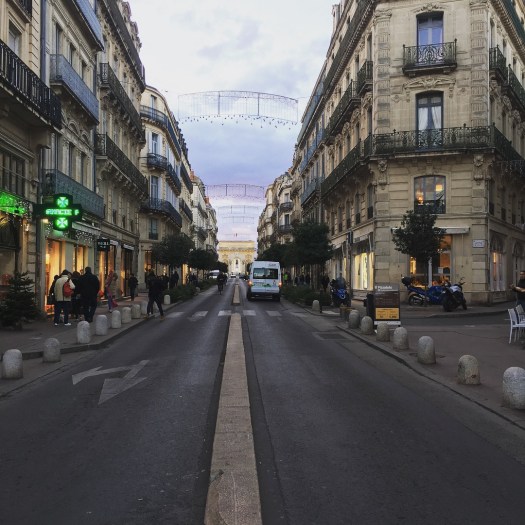
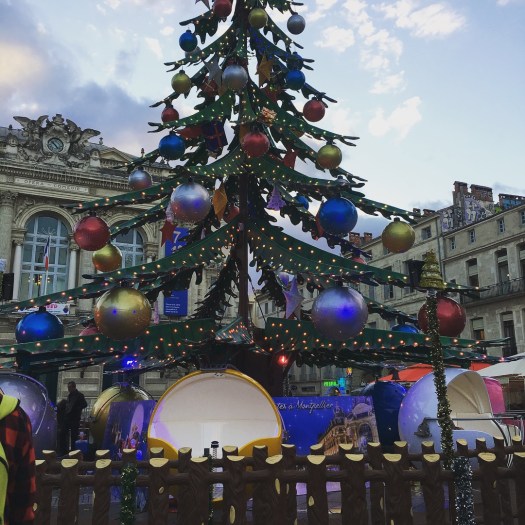
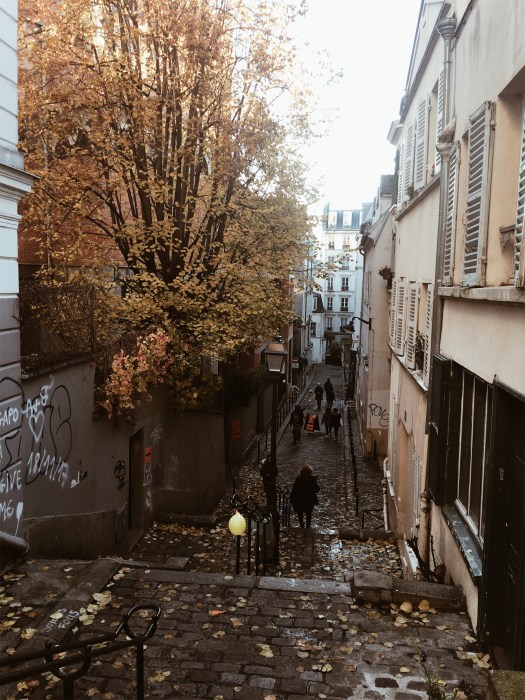
Unfortunately, given the very cold, very wet weather this weekend, there wasn’t much done in terms of outdoor exploring. Luckily, Montpellier is a small city, so I was able to see most of it – at least the older parts. The fact that there were Christmas decorations up made the whole city look like the coziest place ever, especially when those decorations involved strings of lights twinkling above narrow cobblestone streets.


Oh, and of course, the Christmas season also meant a visit to the local marché de Noël, where I finally got to try aligot – otherwise known as incredibly cheesy, buttery mashed potatoes – for the first time! I swear if it wasn’t so unbelievably unhealthy for you, I’d eat that almost every day to keep warm.


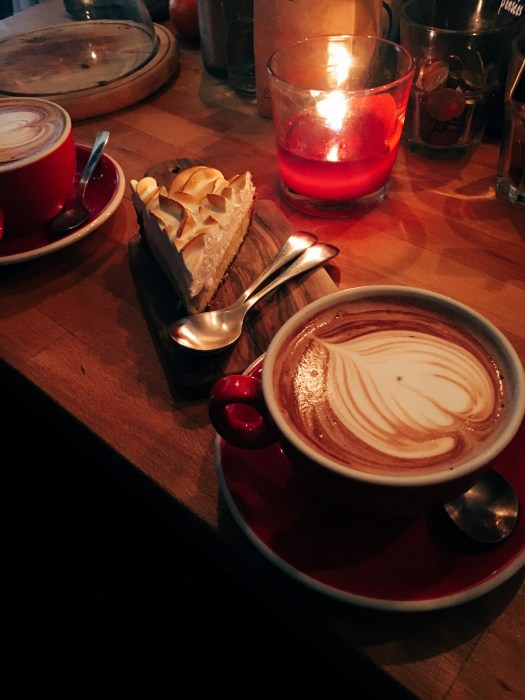
Come to think of it, I think I pretty much ate my weight in chocolate and butter this weekend, what with that Christmas market visit, plus breakfasts of crepes and Nutella, and stops for chocolat chaud and cake (the final café visit before my afternoon train back to Paris today):


Processed with VSCO with e1 preset
Coffee Club, Montpellier


Thankfully, the butter/chocolate overload was tempered by a dinner of roasted fish (dorade, for those wondering), roasted potatoes and chard on Sunday evening.


Processed with VSCO with e2 preset
Behold, my plating skills


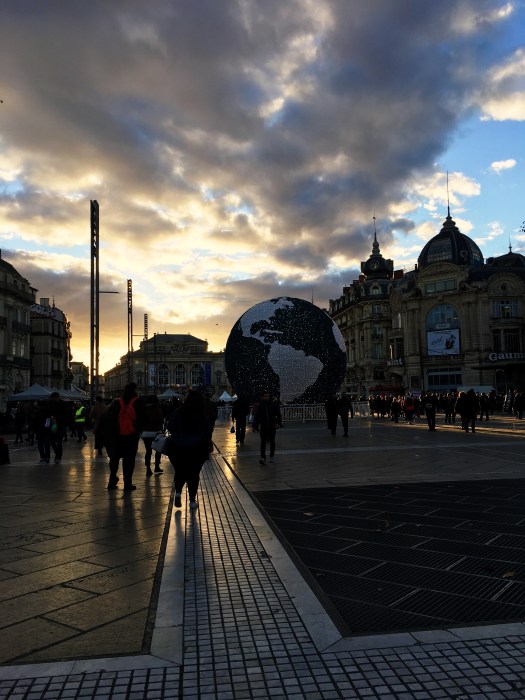
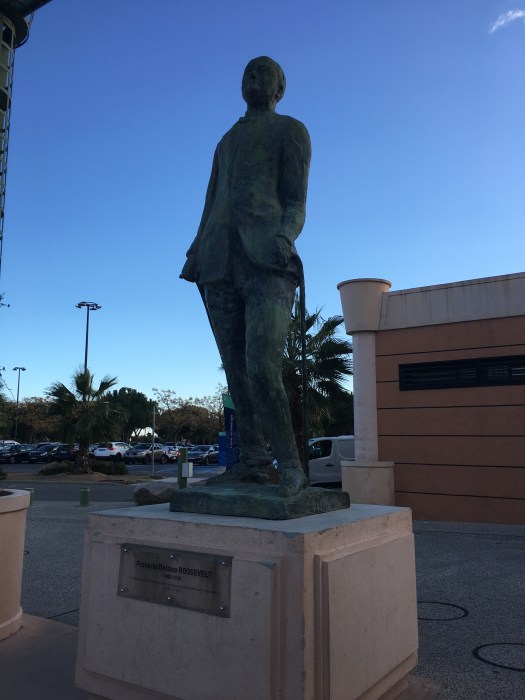
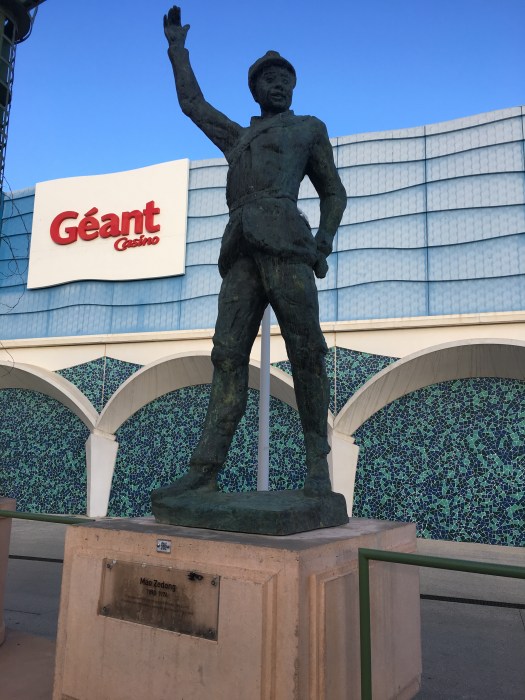
I’ll close out this post by mentioning what was, perhaps, one of my favorite quirks about Montpellier: the Place des Grandes Hommes. This is a sort of rotunda – adjacent to a mall – around which are displayed statues of great men (and one woman) who influenced history. Charles de Gaulle is there, of course, along with some others, like Lenin:


7D114BFC-C48A-408F-975E-7777648EB44A


A truly unrecognizable FDR:


2E47389C-CD11-411E-BE01-9E6F5D5C5126
Not entirely sure about the proportion of the hips here…


And of course, Mao Zedong, who, irony of ironies, is standing directly in front of a giant supermarket megastore (Casino is a supermarket chain, not, you know, an actual casino):


F49E29B6-0881-46B0-8FC8-04D9F4DB969B


Silliness aside, though, Montpellier was really rather adorable, and it was nice to get away from the city for a bit, the cold weather notwithstanding. Now I’ve just got to think about working off all that butter and chocolate before I head back to California for the holidays…

980AEA93-3EBE-4F1F-B4AF-9677ADEEF3B9


Summary of a weekend (78 – 80)

Processed with VSCO with a4 preset
Last of the autumn leaves…


Fridays are for…

  • Friends coming over (with wine) to help you finally finish the rest of that pumpkin pie from earlier that week
  • Feasting on tacos from El Nopal together on the banks of the Canal, and reveling in the fact that – due to the sudden drop in temperature – there was only one other person in line when you got there (though it does also make you eat your tacos faster…wouldn’t want to catch a cold after all)


Processed with VSCO with hb1 preset
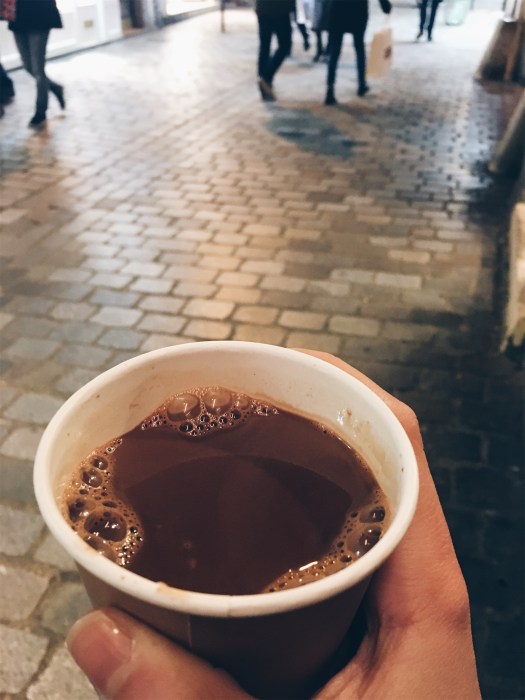
Chocolat chaud from Yann Couvreur in the Marais

Saturdays are for…

  • Steaming, warming cups of thick chocolat chaud bringing the heat back into your hands during a stroll home. Pictured above is the first of what will be undoubtedly many this season, this particular one courtesy of Yann Couvreur Pâtisserie in the Marais.
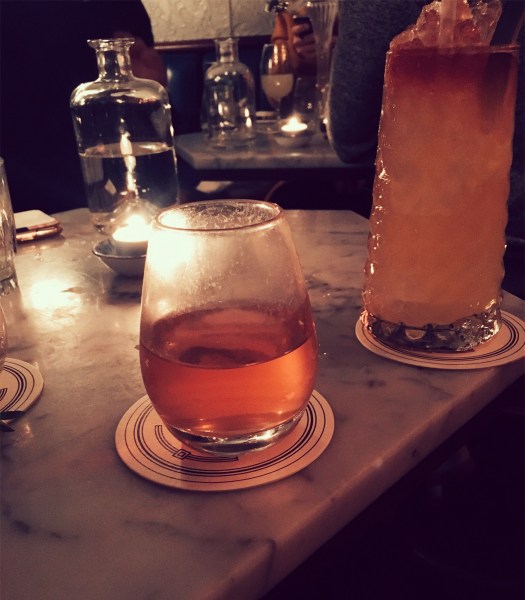
  • Sazeracs at Lulu White, a New Orleans-style bar in SoPi, with another friend, and chance encounters with other art-makers during the course of an evening.
Processed with VSCO with e3 preset
Also this glass is kind of adorable.


And Sundays are, of course, for…

Processed with VSCO with a6 preset

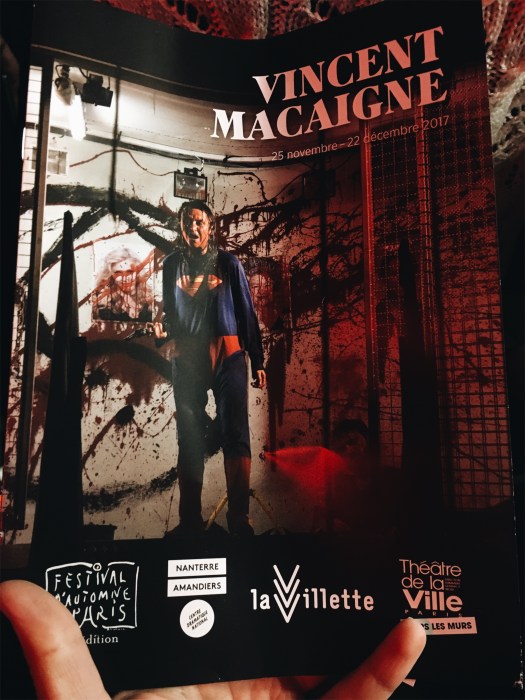
  • Sensorial overloads in the form of a theatre experience that I enjoyed, but am still not entirely sure what to make of. There’s a sort of part 2 of this performance that I’m going to on Thursday. Maybe by then my thoughts on the experience as a whole will be more in order. If nothing else, I will say that it at least dared to be overloading, overbearing, just too much in general, which can’t be said for a lot of theatre these days. Oh, and a special shout-out goes to the fog machine which made…several…imposing appearances throughout the course of the evening.


Here’s to the week ahead.


Processed with VSCO with s2 preset
First holiday decorations up on rue Montorgeuil

76 – 77

What an interesting coincidence that yesterday, I went to a talk on not just the concept/form of but the word “theatre” within the context of globalization and tonight I saw a play whose content consisted in large part of a continual presence of linguistic multiplicities.


Processed with VSCO with b1 preset
Artistic colonialism: something to think on.

I’ve mentioned Wajdi Mouawad before in one of my early posts with regards to his novel, Anima, but how I first encountered his work was through his plays. Actually, other than Anima, I’m not sure he’s written any other novels, but his theatrical output has been  incredibly active.


Generally speaking, I find that the more one is familiar with Ancient Greek mythology/tragedy, the more one can sink into what many (most) of Mouawad’s plays are trying to do, but given how his plays tend not only to reappropriate rhythms, scale, and tropes of classical tragedy but also recontextualize them away from the unattainable, Aristotelian ideal of the ‘regal/untouchable’ tragic hero and into the bodies of other, generally marginalized, figures, the old form, even for those unfamiliar with it, is given new life, a new approaching-epic grandeur and terror.


Processed with VSCO with a6 preset

This play in particular, titled Tous des oiseaux, centers around Wahida, an Arab-American student researching a thesis on al-Hasan ibn Muhammad al-Wazzan – known to history as Leo Africanus, a 16th century Moroccan diplomat who, during one of his travels, was captured, gifted to Pope Leo X and forced to convert to Christianity -, and Eitan, a Jewish-German student studying genetics. They meet in one of the libraries at Columbia University. A relationship follows. Eitan’s family – his father especially – are not happy about this. Following a particularly heated Passover dinner – during which Eitan had planned to introduce his parents + grandfather, who had all arrived to visit him from New York, to Wahida -, Eitan collects the cups and silverware of each family member, and imparts on a journey to get down to the truth of his identity. It is after all, as he claims, only a matter of 46 chromosomes, not the stories of survival, of tragedy, of factions created between groups of people. His search, after initially revealing a startling anomaly, takes him and Wahida to Jerusalem, and to a grandmother he never met.


Having read several of Mouawad’s other theatrical works, I was already prepared for the moment of catharsis that would eventually arrive, the epic reversal that would upend everything, but especially a character’s perception of who they – fundamentally – are as a person. The continual reworking of the Oedipal reveal, if you will. Regardless, even though I guessed fairly early what the reveal was going to be, I still found myself in awe of the whole thing. The performances, it goes without saying, were astounding. The international and multilingual cast was expending a level of energy and endurance and passion that is challenging in a two hour performance, and almost unthinkable in a four hour one (which is what this was). As for the technical elements, the set design resonated the most with me. Starting off as a seemingly solid wall on which was projected a chalk drawing of the skeleton of a library reading room, the set of imposingly tall panels would later be moved about the stage to re-delineate it, reveal gaps, toy with our depth perception, basically through constant fracture and repositioning, question our notion of the illusion of stability, unity, concreteness in favor of a vision of multiplicity, of the plural nature of being, of being able to be both a solidly tall and easily moveable wall. They exist in paradoxe.


And as paradoxes they, like the narrative itself, eschew a strictly linear representation of time and story ‘advancement’, moving and flowing back and forth and ‘folding’ as one might imagine a temporal plane must fold. Time is not a straight line here. Time is present, both within and outside of our ‘now’, always accessible, with temporal shifts occurring as naturally and spontaneously as would a random memory popping into your head. Why should a set design not reflect this sporadic, random, spontaneous ebb and flow?


On a practical level, the walls also exist as surfaces on which to project French surtitles. Yes, this play contained speech in English, German, Arabic and Hebrew but never in French. French remained strictly literary, and even that is not necessarily the same French that made up the original text. Rather, it is a French that results from a retranslation of a translation – one of Mouawad’s goals, as he specified in an interview printed in the program, was to let the multiple languages of the place the play is set in, in this case Jerusalem, ring out from the characters who would normally speak them. If/when the text ever appears in written form, and especially if that form was the original French, it can never – will never – exist in the same way as the live performance does, what with its constant flow between languages, a polyphonic birdsong.


Oh and there was also a genuinely funny subplot involving a man painting large canvases with his sperm and organizing exhibits around this art that he ‘begat’. Actually, to my surprise, there was quite a bit more humor in this than I was expecting.


As it goes with these things, I don’t know if I’m accurately getting at what it was to experience this show live, or even if what I am saying is nothing more than on the surface observation – yeah sometimes I doubt my own abilities to write about this. Regardless, I do know that I would pay to see this again in a heartbeat, to try and catch some things I missed…maybe discover something different.


But there are other plays to be seen first.


Oh yeah, and Happy Thanksgiving, everyone!

Choices… (67 – 68)

Today I want to talk about choices.

We all make choices. Sometimes they are simple choices – what to have for lunch, whether to wear one shirt over another. Other times they’re spur of the moment choices – choosing to check in your suitcase, for example, after the gate agent suggests that it may or may not have to be checked anyway, only to remember at the last minute that you’ve got a plastic case of Trader Joe’s dark chocolate peanut butter cups as well as a cardboard canister of oats in there that you were really counting on not getting squished and now have to slightly agonize about it until you pick up your bag again (thankfully, all was well).

And then there are choices that, in retrospect, seem absolutely inexplicable. Like going to see a show on the day you arrive after a transatlantic flight.

But more on that in a minute. First, Boston.

Overall, everything went fine. I won’t lie and say it wasn’t a bit odd being back at first, but I’m not sure whether that has more to do with the lingering memories of the breakup this place holds, or if it was simply a result of not being able to go back to the apartment I lived in while I was here. I will say though, that whether consciously or not, I did not go back to Central Square, nor past the apartment. The closest I came was the Dumpling House on Mass. Ave, where I met up with a couple friends for dinner.

But in sum, no breakdowns, no backtracking. Maybe this was in part because I was just so busy all the time, but I’m just going to attribute it to general healing and progress.

And now back to the topic of today’s entry: choices.

I’m not entirely sure what the sequence of events was, but at some point, my brain told me that yes it was a good idea to go see a 21h (9pm) show – a two hour 9pm show – on the same day that I arrived back from Boston. Seeing as how I have a really hard – read: impossible – time falling asleep on airplanes, I think it was just the challenge to stay awake in and of itself that motivated me to not try and exchange the theatre ticket for another night.

And so last night I returned to the Théâtre de la Bastille to see a performance of Des Territoires (…d’une prison l’autre) the second in a three-part series of plays by Baptiste Amann. The general gist of it is ‘what would a 21st century revolution look like’, and it explores this through the mise en scène of a family of four – three brothers and one sister – just returning home after burying their parents. Upon entering their house, they are accosted by two acquaintances, who inform them that outside a rebellion is brewing and getting closer. The cast is rounded out with the arrival of Louise Michel (yes, as in named after the Communard and 19th century French Anarchist Louise Michel), a sort of ‘anachronistic’ element that not only anchors the rest of the characters within their own time, but also draws them back to the Paris Commune of 1871.

I’ll be honest, I spent the majority of the first half of the play trying not to nod off, so I think I missed a lot of…well…everything, but there was a point towards the final third where a loud, sharp sound cue announced the start of something between a dream sequence and a flashback. Paris, 1871, the tail end of the Commune; the Communards have reunited, and one of them, Théophile Ferré (who was played by the same actor that played the mentally disabled brother of the sibling quartet), is marked for dead. So begins an examination of the nature of revolutions, of who they sacrifice, who is left behind, and in all this, where – and how – the human can be found again.

Given my lack of complete coherence, I think what stood out to me most were the technical elements, especially the sound design, which used the cavernous nature of the space to create an immersive and almost pressingly present soundscape.

Of course, by the time the play ended, I was about this close to falling asleep on the sidewalk, so I didn’t necessarily take the time to note my post-show reflections either.

As such, today I took things a bit easy: after an 8am (yeah that was a reallllly smart idea) meeting with a student, I rewarded myself with a brisk walk for a bit before heading home to buy some groceries and do laundry.

And now my eyes are getting heavy again, so I’m just going to end this here.

It’s good to be back here again.

Overhear Paris, and other pre-conference activities (64 – 66)

Will I ever get tired of fall foliage? No, no I will not.

I think by now it should be relatively obvious that any time I do a post on a clump of days like this, it’s because I’ve been reading all day. Of course.

Last-minute prep for Boston has been contributing to this as well. Before anyone asks: yes, it feels weird to be going back. No, I don’t necessarily think I’m going to break down. But who knows.

In any case, today, at least, proved a good final distraction before conference prep, editing, and packing got in the way.

Visions in red.

First, a visit to the Palais de Tokyo to check out the expo Medusa bijoux et tabous (Medusa, jewelry and taboo) before it closes on the 5th. As the name suggests, the primary focus was on jewelry, but more specifically, the different ways in which jewelry is used or appropriated by the wearer not only to create, affirm, or subvert an identity, but also establish or undermine cultural norms and values. I’ve never really given much thought to how my own choices in jewelry are/can be seen as a reflection of myself – as my style/preferences have changed frequently throughout the years –, but maybe next time I’m getting ready in the morning, I’ll take some time to examine what it means to have so many pieces shaped like triangles.  

No lie, would probably actually wear this if given the chance.

The evening’s second event was more in line with my usual wheelhouse of artistic interests, namely experimental/experiential theatre. About a week ago, a friend posted a link to It’s Not a Box Theatre’s Overhear Paris project, a theatrical experience advertised as an interactive walk through part of Nation, punctuated by periodic performances. The first night of performances was this evening, and, as I have been doing for pretty much every show I end up going to and as this would be my only chance to see this, I pretty much said, why the hell not and signed up for a slot.

The way it works is that you show up to a designated meeting spot (in my case, just outside metro Avron), where someone from the troupe will meet you and hand you a phone – having a good set of headphones is a plus for this, but they can provide those as well – with a preloaded app open and ready to guide you along your journey. At your start time – only one person can take the walk per slot – the app is launched, and a recording starts guiding you along the designated route. Every so often, you come across a performer, who also has a phone with the app preloaded, and when you do, your phones pair up, and their narrative starts playing as they in turn – through dance and gesture – perform their story in front of you. It’s a strange sort of intimacy that happens when you have a situation like this where two people, seemingly isolated with their headphones on, are in fact connected via virtual and corporeal transmission of a narrative. In any case, there were moments where I couldn’t help but also watch some of the passerby who stole sometimes intrigued, sometimes confused glances at what was going on.

The theme of the show was on immigration, expatriation, generally, leaving one’s home to move abroad, and the trials and tribulations that come with it. At the end of the show, once you turn your phone back in, the team asks if you would like five minutes to share your story. Which I did.

If anyone reading this is currently in Paris, the show is still on for a few more performances. I highly recommend checking it out if you have the chance.

52-54

Yeah, it’s been a bit slow here lately. 

Tuesday was especially uneventful (another day of reading…yippee), and I’m really starting to wonder (again) if there isn’t more I should theoretically be doing regarding a little thing called my ‘as-yet-to-be-written prospectus’. The nagging feeling of imposter syndome – that I’m not doing this right/that my project is nonsense – tends to creep up at times like this, but, let’s be honest, isn’t that just part of the fun of grad school???
Anyway

Wednesday I decided to take some time away from all the reading I have been doing – the headache I woke up with that morning may or may not have been a factor in this – and, after my weekly market stop/meal prepping, I decided to spend the rest of my afternoon before my 6pm theatre class at the high school walking around and just being in the world. Before I could fully be, however, I made a quick visit to Messieurs-Dames, where I finally learned the value in going to a salon for a (free) bang trim, versus just hacking at them yourself and hoping for the best.

The rest of my afternoon was spent looking at art.

Seen at the Tuileries

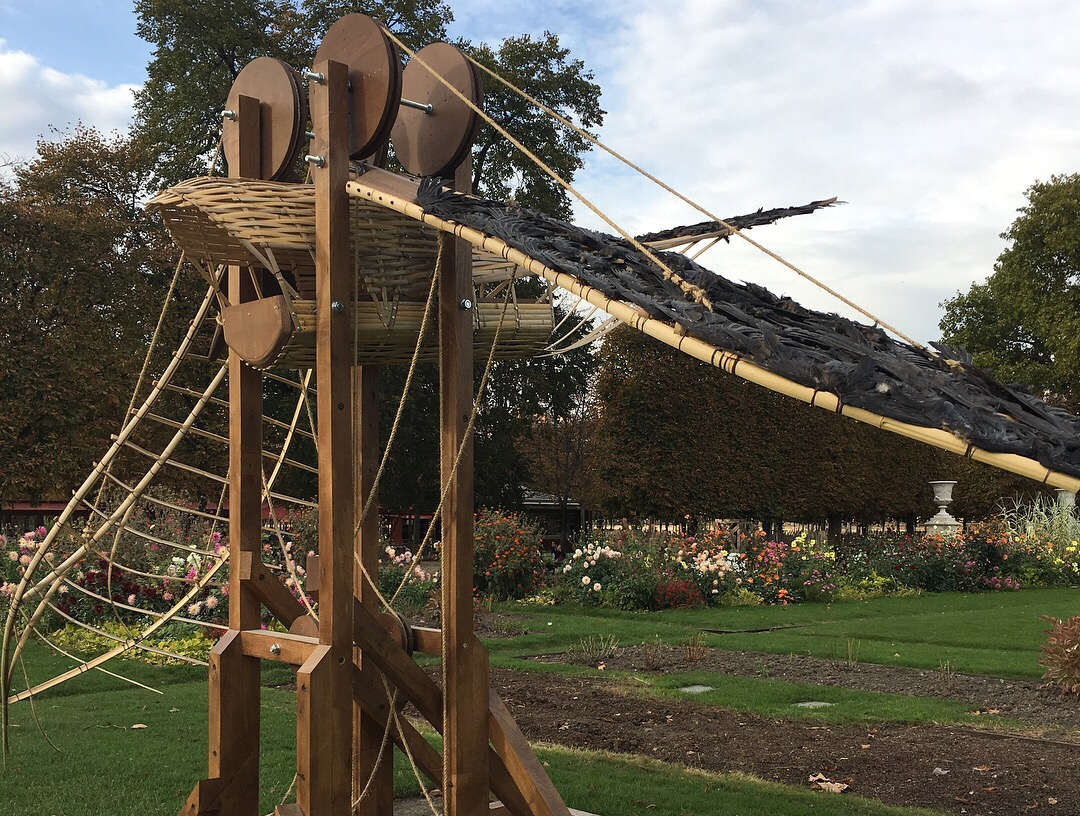
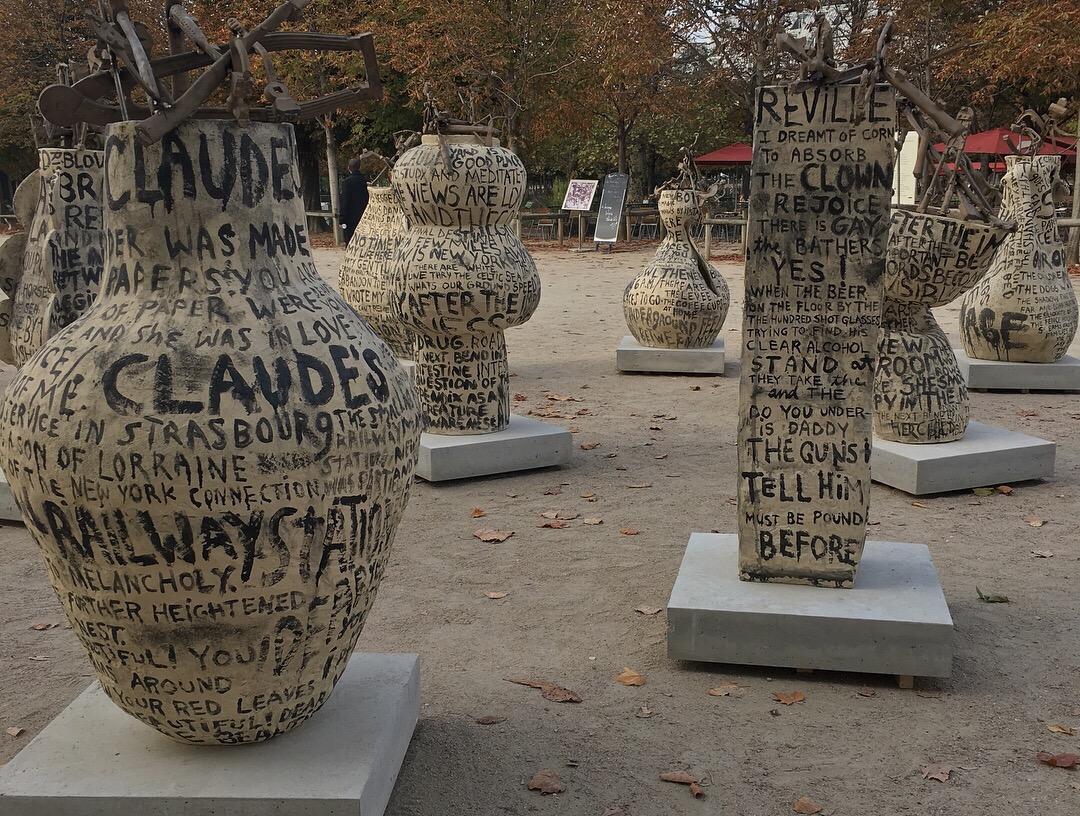
This weekend is the annual Foire Internationale d’Art Contemporain, or FIAC, and while I am in no place to shell out 30eu to go and see what’s on at the Grand Palais, I am more than happy traipsing about looking at free art installations around the city.

And speaking of artistic things….

The one time a random choice is a really, really good one.

I think I may have finally found a show that puts these ideas I’m trying to formulate regarding notions of plurality, temporality and the ‘destruction’ of the semiotic order on the stage into practice. This was a play with four actors – two men, two women – and for the first quater of it or so, the dialogue was structured in a way that although only one of the men and one of the women were ‘playing’ in the lit area downstage, when their mouths began to move, it became very obvious that the voices that came out were not theirs but those of their counterparts standing in the blacked out upstage area. As the show continued, this notion of dislocated, decentered voice and identity was explored further, with the ‘voicing’ actors – who were also mic’d – sometimes speaking to one another, sometimes directly addressing the silent counterpart of the voiced actor, even though they were responding to the latter’s words. Hell, at one point, even the formerly silent actors added their voices into the mix.
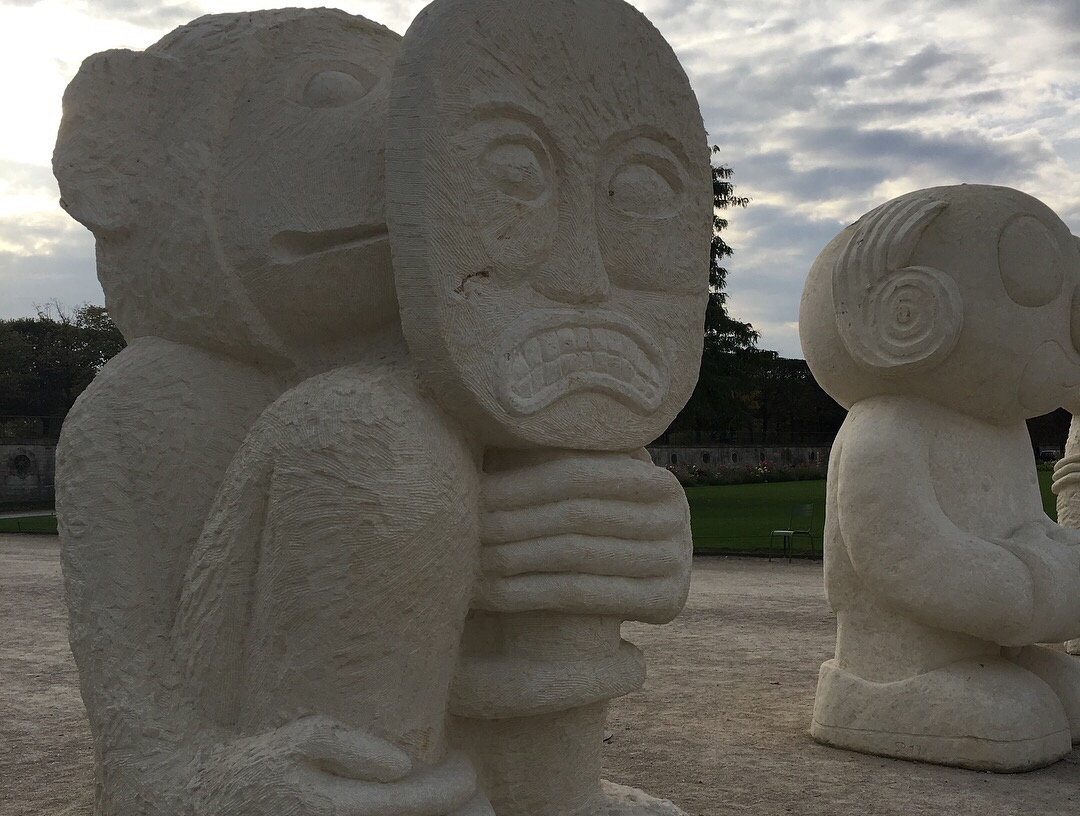
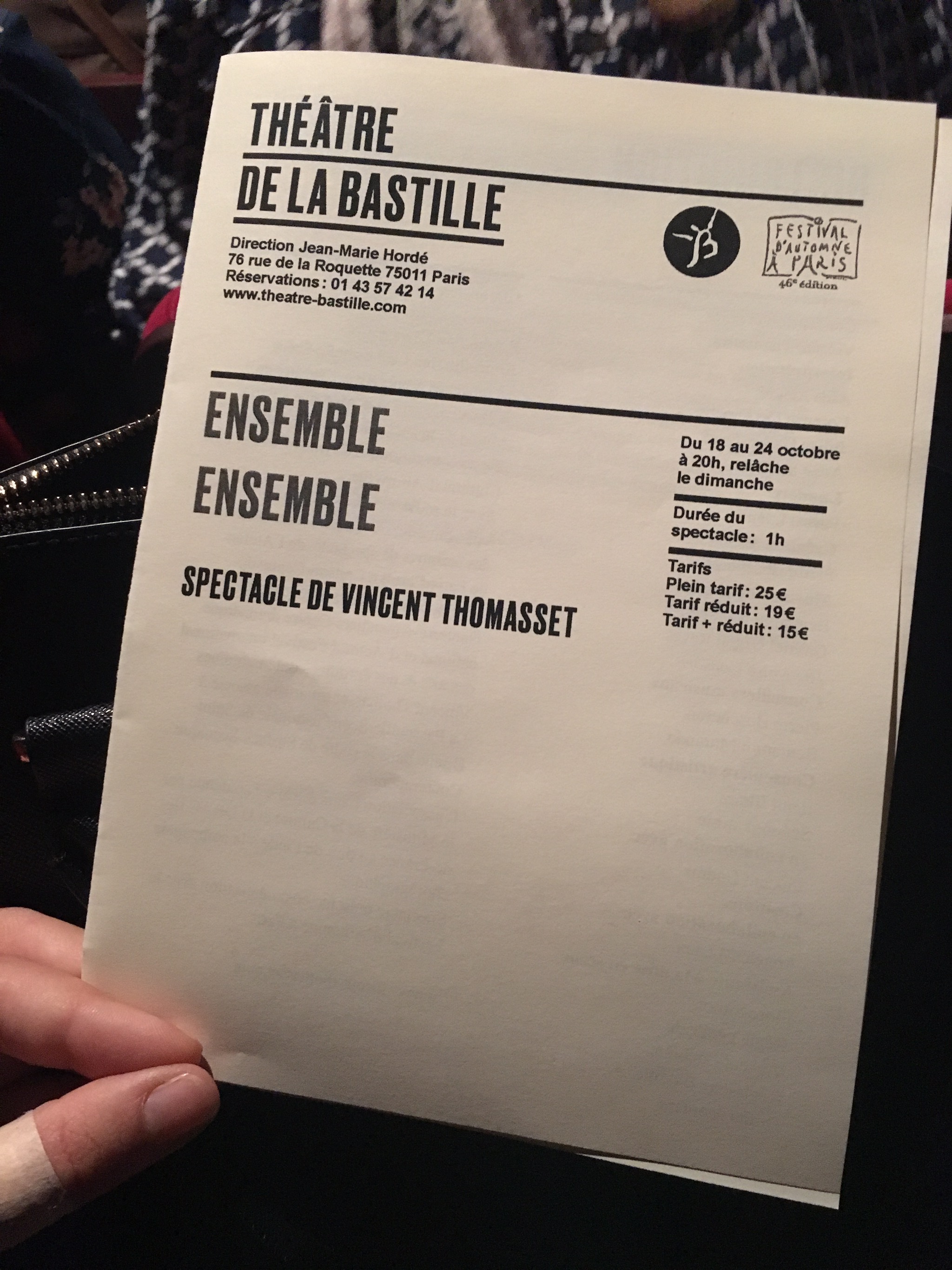
And just because it has to do with my project, I need to talk about the space. Much like my impression of the studio space at the Comédie Française, here I couldn’t help but get the impression that the actors were more ‘larger-than-life’ figures instead of characters, but this time it may have been a result of the fact that the stage space is actually wider than the house. It almost felt like it could consume you, swallow you. Comforting, but threatening at the same time. It’s beautiful.